
Gas Safety in Pottstown: CO Checks for Homes With Aging Utility Lines
Pottstown has a lot of older housing, and a good share of it runs on natural gas for heat, hot water, and cooking. That is not a problem in itself. Gas appliances are safe when they are installed correctly, vented properly, and maintained on a regular schedule. The goal of this guide is simply to help homeowners understand carbon monoxide safety and what a professional CO check involves.
This is an informational piece, written in a calm, matter-of-fact way. Carbon monoxide is worth taking seriously, but the right response is steady habits and regular maintenance, not alarm. Here is how to think about it in an older Pottstown home.
What Carbon Monoxide Is and Why It Matters
Carbon monoxide, often written as CO, is a colorless, odorless gas produced when fuels like natural gas, oil, wood, or propane do not burn completely. Because you cannot see or smell it, detection depends on working alarms rather than your senses. That is the whole reason CO detectors exist.
Any home with a fuel-burning appliance, an attached garage, or a fireplace should have carbon monoxide detection. In an older home, where furnaces, water heaters, and venting may have aged over the decades, that protection is simply good practice.
Where to Place CO Detectors
Detector placement is one of the easiest things a homeowner can get right. Follow the manufacturer's instructions, and use these general guidelines as a starting point:
- Install a CO detector on every level of the home, including the basement.
- Place one outside each separate sleeping area so it can wake people at night.
- Keep detectors away from direct drafts, kitchens, and bathrooms where humidity or cooking can cause false readings.
- Test detectors monthly and replace batteries on a set schedule.
- Replace the detectors themselves according to the manufacturer's date, since the sensors wear out over time.
What a Professional CO Check Covers
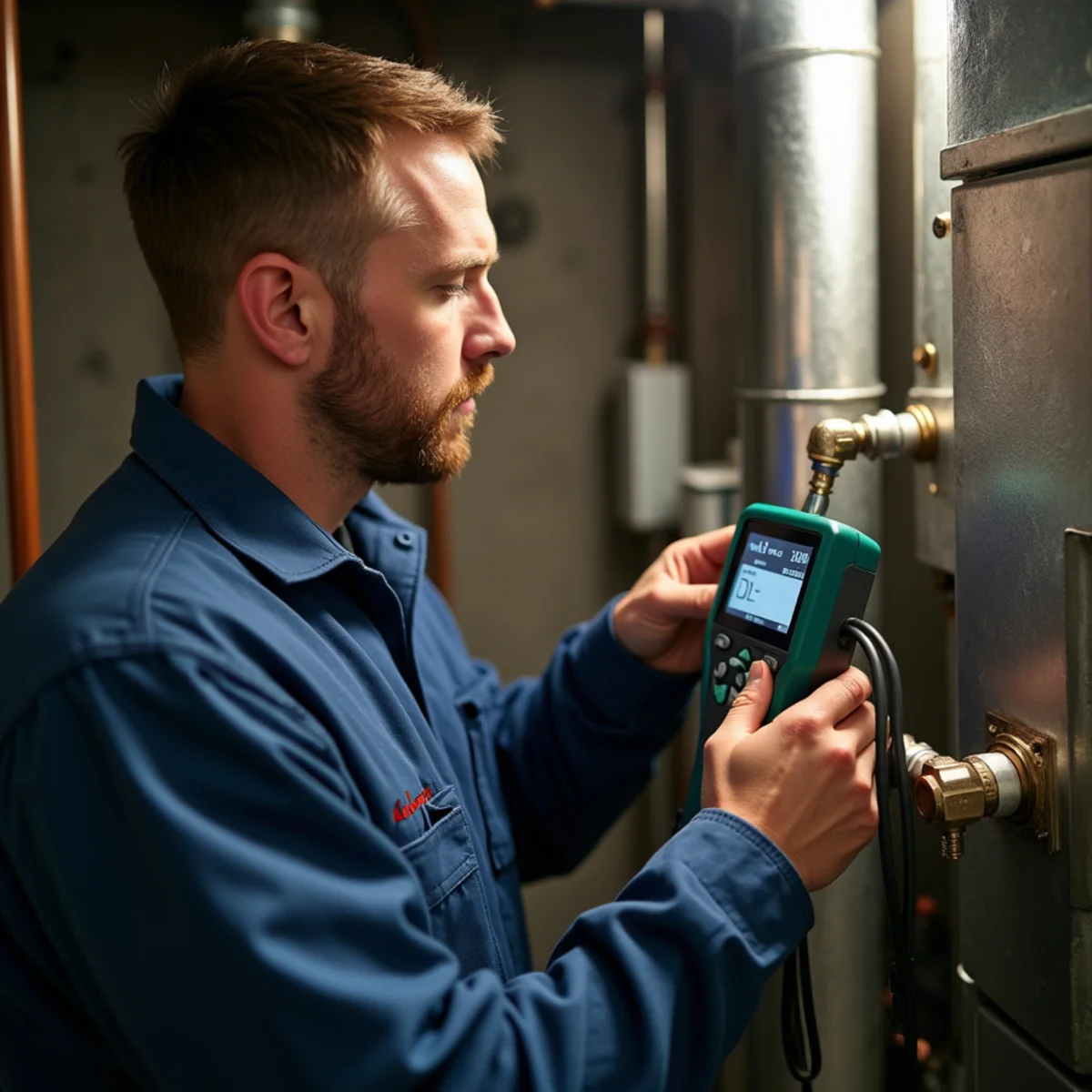
A professional carbon monoxide and gas safety inspection goes beyond the detectors on your wall. It looks at whether combustion appliances are burning cleanly and venting safely. During a CO check, a technician typically evaluates the condition and draft of the furnace, boiler, and water heater venting, and measures the combustion output at the appliance.
Key items a technician reviews include:
- The condition of the heat exchanger, which is a common source of CO if it cracks.
- Proper draft and venting so combustion byproducts leave the home as designed.
- Adequate combustion air supply to the appliances.
- The flame characteristics and burner condition.
- Whether existing CO detectors are present, correctly placed, and within their service life.
The heat exchanger
The heat exchanger is the metal wall that keeps combustion gases separate from the air blown through your home. When it develops a crack, usually from years of heating and cooling cycles, it can let byproducts mix with the household air. A technician inspects it visually and with a camera or mirror, because a hairline crack that only opens once the metal heats up will not show on a cold, quick glance.
Draft and combustion air
An appliance can burn cleanly and still spill exhaust indoors if it cannot draft properly or is starved for combustion air. Tight modern weatherization, a strong kitchen or bath exhaust fan, and a clothes dryer can all pull against a furnace's venting. Checking draft under those real-world conditions is part of a thorough inspection, not just a check at idle.
What a Combustion Analysis Measures
The most useful part of a professional visit is the combustion analysis, because it puts numbers on what the eye cannot see. A calibrated combustion analyzer is placed in the flue while the appliance runs, and it reports the actual condition of the burn rather than a guess. This is measurement, not alarm, and clean numbers are the common result.
During that test a technician typically walks through this sequence:
- Step 1: Let the furnace or boiler run until it reaches steady operating temperature, since a cold start reads differently.
- Step 2: Sample the flue gas for carbon monoxide, oxygen, and combustion efficiency with a calibrated analyzer.
- Step 3: Re-test under worst-case draft, with exhaust fans and the dryer running, to see whether the vent still carries byproducts out.
- Step 4: Inspect the heat exchanger and burners for cracks, soot, or flame distortion that would explain a poor reading.
- Step 5: Confirm every CO detector in the home works, sits in the right spot, and is within its rated service life.
- Step 6: Document the readings so next year's check has a baseline to compare against.
Everyday Habits That Keep Things Safe
Most CO safety comes down to a few durable habits. Have fuel-burning appliances inspected and maintained on schedule, keep vents and chimneys clear, and never use outdoor equipment like grills or generators indoors or in an attached garage. A running car in a closed garage is another common source worth avoiding entirely, even for a minute.
It also helps to know the early symptoms of CO exposure, since they can be mistaken for the flu. Headache, dizziness, nausea, and unusual fatigue that seems to ease when you leave the house are worth paying attention to. If several people or pets in the home feel unwell at the same time, that pattern is a reason to get outside and seek fresh air.
If a CO alarm sounds, treat it as real. Get everyone outside to fresh air and call for help from outside the home. Do not spend time hunting for the source yourself, and do not silence the alarm and go back to sleep. Emergency responders and a qualified technician can find and fix the cause.
Why Older Homes Deserve Extra Attention
None of this is about assigning blame to any utility or suggesting a specific hazard exists at your address. It is about the simple reality that appliances, venting, and detectors all age. A furnace installed decades ago, a water heater on its second or third owner, or a chimney that has not been checked in years all benefit from a fresh look.
Regular maintenance is the throughline. A yearly check on your heating equipment catches small issues before they matter, and pairing that with a dedicated CO and gas leak safety inspection gives an older Pottstown home a solid margin of safety. Across Montgomery County, this kind of routine attention is what keeps gas heat both comfortable and safe.
Frequently Asked Questions
Install at least one CO detector on every level of the home, including the basement, plus one outside each separate sleeping area. Always follow the specific placement instructions that come with your detectors.
Get everyone outside to fresh air right away and call for help from outside the home. Do not search for the source yourself or silence the alarm and go back inside until responders or a technician say it is safe.
A yearly inspection of heating equipment is a sound baseline, and older appliances benefit from that regular attention. A combustion and venting check confirms the equipment is burning cleanly and exhausting safely.
Most CO detectors are rated for roughly five to ten years, and the sensor wears out even if the unit still powers on. Check the manufacture or replace-by date printed on the housing and swap the detector when it is due, rather than relying on the battery test alone.
Carbon monoxide safety in an older home is not complicated: working detectors, clear venting, and regular maintenance. If you want a professional set of eyes on your gas appliances and detectors, HVAC Pottstown PA performs thorough CO and combustion checks. Call +1 (327) 210-5999 to schedule an inspection and keep your household on the safe side of the equation.
Need HVAC service in Pottstown today?
Call HVAC Pottstown PA for fast, honest HVAC service in Pottstown. We answer 24/7 and offer same-day service across Montgomery County.
Keep Reading
Tri-County Service: How Pottstown's Montco/Chester/Berks Line Shapes HVAC Response
Pottstown sits at the meeting point of three counties, and that location shapes how fast a technician can reach you. Here is how the tri-county geography works in practice.
Read more
Manatawny Creek Flood Zones: Protecting Outdoor Units in Pottstown's West End
Manatawny Creek gave the West End its name and its character, and it also floods. Here is how to protect an outdoor condenser or heat pump in the low ground near the water.
Read more