
Schuylkill River Flooding & Your HVAC: Elevation Rules for Pottstown Homes
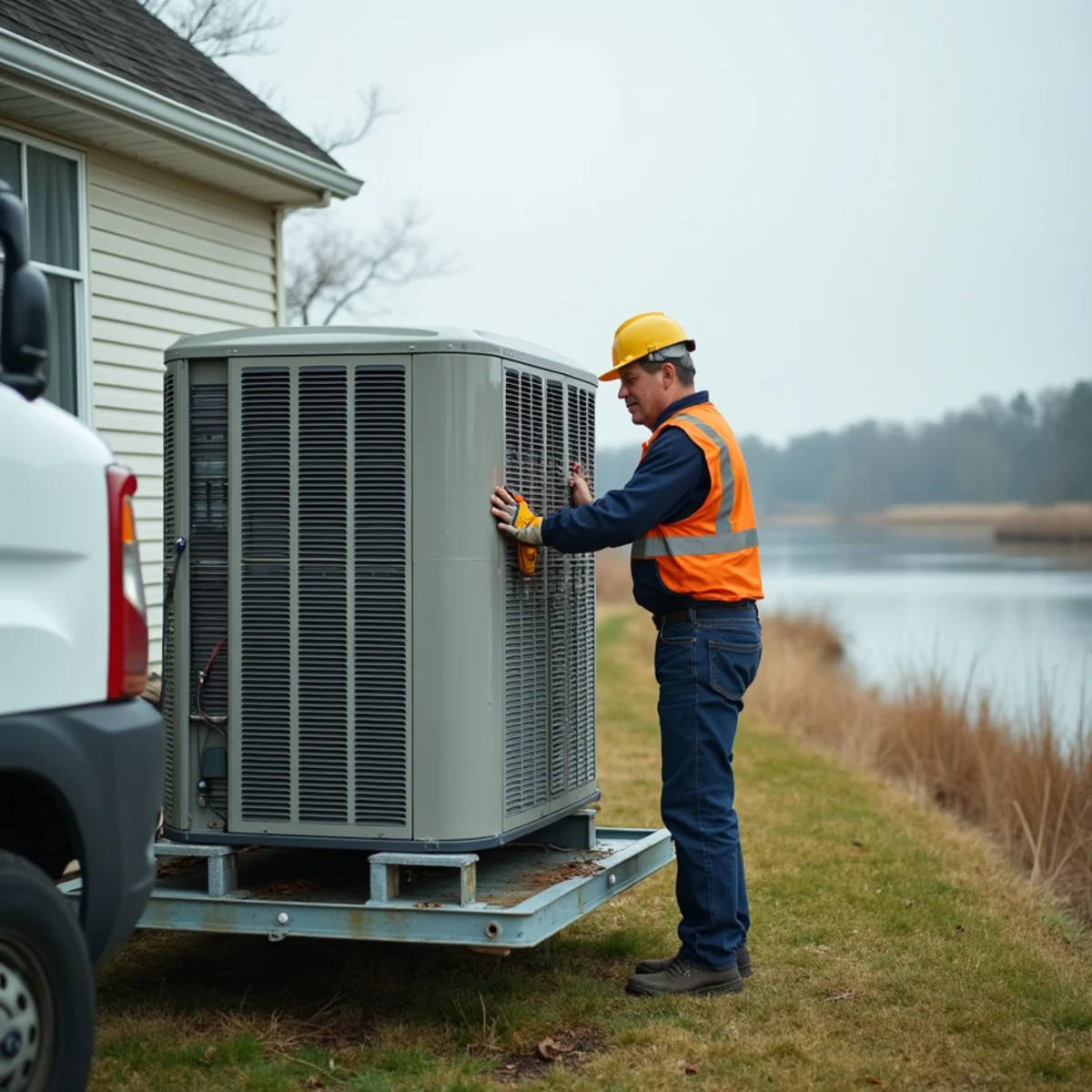
Pottstown grew up on the north bank of the Schuylkill River, and the water that powered the iron forges still runs right past some of the town's oldest streets. That closeness has a downside. When the Schuylkill rises after heavy rain or a fast snowmelt, the low ground along the riverfront can take on water, and mechanical equipment that sits too low pays the price.
This is not a scare piece. It is a practical look at how elevation rules and a few smart installation choices keep a furnace, a boiler, or an outdoor condenser working through a wet spring. If you own a home near the water in Pottstown, the height at which your equipment sits matters as much as its efficiency rating.
Why the Schuylkill Floodplain Is Different
Pottstown sits where the Schuylkill River bends past the borough on its way toward Philadelphia. The historic mill district and the streets closest to the river sit on relatively flat, low ground, which is exactly why the town grew there in the first place. Flat riverfront land was ideal for forges, foundries, and the rail lines that served them.
That same low elevation is what makes flood planning part of any honest HVAC conversation near the water. Roughly 45 inches of precipitation fall on the area in a typical year, and a heavy multi-day rain upstream can push river levels up quickly. Homes in the mapped floodplain face a real, if occasional, risk of standing water at ground level.
Equipment That Sits Too Low Is the First Casualty
Floodwater and mechanical equipment do not mix. Even a few inches of water can ruin components that are expensive to replace and slow to source.
The parts most vulnerable to a rising Schuylkill are the ones installed at or near grade:
- Outdoor condensers and heat-pump units set directly on a low concrete pad rather than a raised stand.
- Furnaces and boilers installed on a basement floor, where water collects first.
- Control boards, blower motors, and gas valves that fail permanently once submerged.
- Ductwork run low along a basement, which traps moisture and grows mold after a flood recedes.
- Condensate drains and pumps that back up when the surrounding ground is saturated.
Elevation Rules Worth Following
Local floodplain construction standards and manufacturer guidance point in the same direction: get the equipment up. When we service homes in the low-lying blocks, we look at how high critical components sit relative to the expected flood level.
A few elevation practices make the biggest difference:
- Mount outdoor condensers on a raised platform or wall bracket so the coil sits above typical flood height rather than on a grade-level pad.
- Relocate a basement furnace or boiler to a higher floor or a raised platform where the layout allows it.
- Raise electrical disconnects, thermostats, and control components above the base flood elevation used for the property.
- Route ductwork higher in the structure and seal joints so a receding flood does not leave standing moisture behind.
- Add a properly sized sump and battery-backup pump to manage groundwater before it reaches equipment.
After the Water Recedes: What to Check
If a home near the river has taken on water, do not simply flip the system back on. Flooded gas and electrical equipment can be unsafe even after it looks dry. If you smell gas or suspect the equipment was submerged, leave it off and call for professional help rather than testing it yourself.
A technician will check for water intrusion in the burner assembly, corrosion on the control board and wiring, moisture inside the blower housing, and silt in the condensate system. Submerged gas valves and electronic controls are usually replaced rather than dried out, because a component that failed underwater can fail again without warning.
Gas and electrical components
Submerged gas valves, ignitors, and control boards get replaced rather than dried out. A part that failed underwater can pass a quick bench test and then fail again on the coldest night, which is exactly when a home near the water cannot afford to lose heat. Once water has been inside a sealed component, its long-term reliability is gone.
Blower, ductwork, and drainage
Moisture trapped in the blower housing and in low ductwork grows mold as it dries slowly over the following weeks. The condensate system gets flushed of silt, and any duct run that held standing water is cleaned, dried, and resealed before the system is allowed to run. Skipping that step trades a mechanical problem for an indoor-air problem.
A Technician's Playbook for Floodplain Installs
After enough years working the low blocks near the river, a few habits become second nature. The first is measuring, not guessing. We mark the base flood elevation for the property on the foundation wall, then set every critical component above that line with margin to spare. A laser level and the address's flood data replace the old habit of dropping a new unit exactly where the old one sat.
The order of the work matters as much as the heights themselves. Getting the mechanical elevation right is only half the job; the electrical, the condensate handling, and the venting all have to rise with it or the weakest link floods first. Here is the sequence we follow on a floodplain replacement:
- Step 1: Pull the flood elevation for the address and mark the target height on the wall before anything is disconnected.
- Step 2: Build or verify a raised platform or wall bracket rated for the weight of the condenser or air handler.
- Step 3: Relocate the electrical disconnect, whip, and any low-mounted controls above the marked line.
- Step 4: Raise the condensate pump and reroute the drain so a saturated basement cannot back water into the system.
- Step 5: Seal and re-pitch low ductwork, or reroute it higher, so a receding flood drains instead of pooling.
- Step 6: Pull the mechanical permit and document the finished heights for the homeowner's records and insurance file.
Planning Ahead in the Riverfront Neighborhoods
The blocks nearest the water, including the area around the Riverfront Park District, are where elevation planning pays off most. If you are replacing a system in one of these homes, treat the install as a chance to raise everything to a safer height rather than dropping the new unit exactly where the old one sat.
A measured, permitted installation that accounts for the floodplain costs a little more up front and saves a great deal the next time the Schuylkill runs high. Pairing that with a plan for fast emergency HVAC repair means a wet spring becomes an inconvenience rather than a total system loss.
Frequently Asked Questions
The goal is to keep the condenser coil and electrical components above your property's base flood elevation. A raised platform or wall bracket usually does the job, but the exact height depends on the flood maps for your specific address.
Furnaces and boilers that were submerged usually need major components replaced, and often full replacement. Gas valves and control boards that sat underwater are not considered safe to reuse, even if the unit powers on afterward.
No. Leave a flooded system off and have it inspected first. Submerged electrical and gas components can be dangerous even when they appear dry, so a professional should verify the equipment before it runs again.
The target is the property's base flood elevation plus a margin, not a fixed number of inches. Because the right height comes from the flood maps for your specific address, we measure and mark it on site before setting the new equipment rather than matching the old placement.
The Schuylkill River gave Pottstown its start, and homeowners near the water plan around it every spring. Getting your HVAC equipment up to a safe elevation is one of the cheapest forms of flood insurance you can buy. If you own a floodplain home and want an honest look at how your system sits, HVAC Pottstown PA can walk the property with you. Call +1 (327) 210-5999 to schedule a visit.
Need HVAC service in Pottstown today?
Call HVAC Pottstown PA for fast, honest HVAC service in Pottstown. We answer 24/7 and offer same-day service across Montgomery County.
Keep Reading
Tri-County Service: How Pottstown's Montco/Chester/Berks Line Shapes HVAC Response
Pottstown sits at the meeting point of three counties, and that location shapes how fast a technician can reach you. Here is how the tri-county geography works in practice.
Read more
Manatawny Creek Flood Zones: Protecting Outdoor Units in Pottstown's West End
Manatawny Creek gave the West End its name and its character, and it also floods. Here is how to protect an outdoor condenser or heat pump in the low ground near the water.
Read more