
Spring AC Tune-Up Checklist: Beat July Humidity
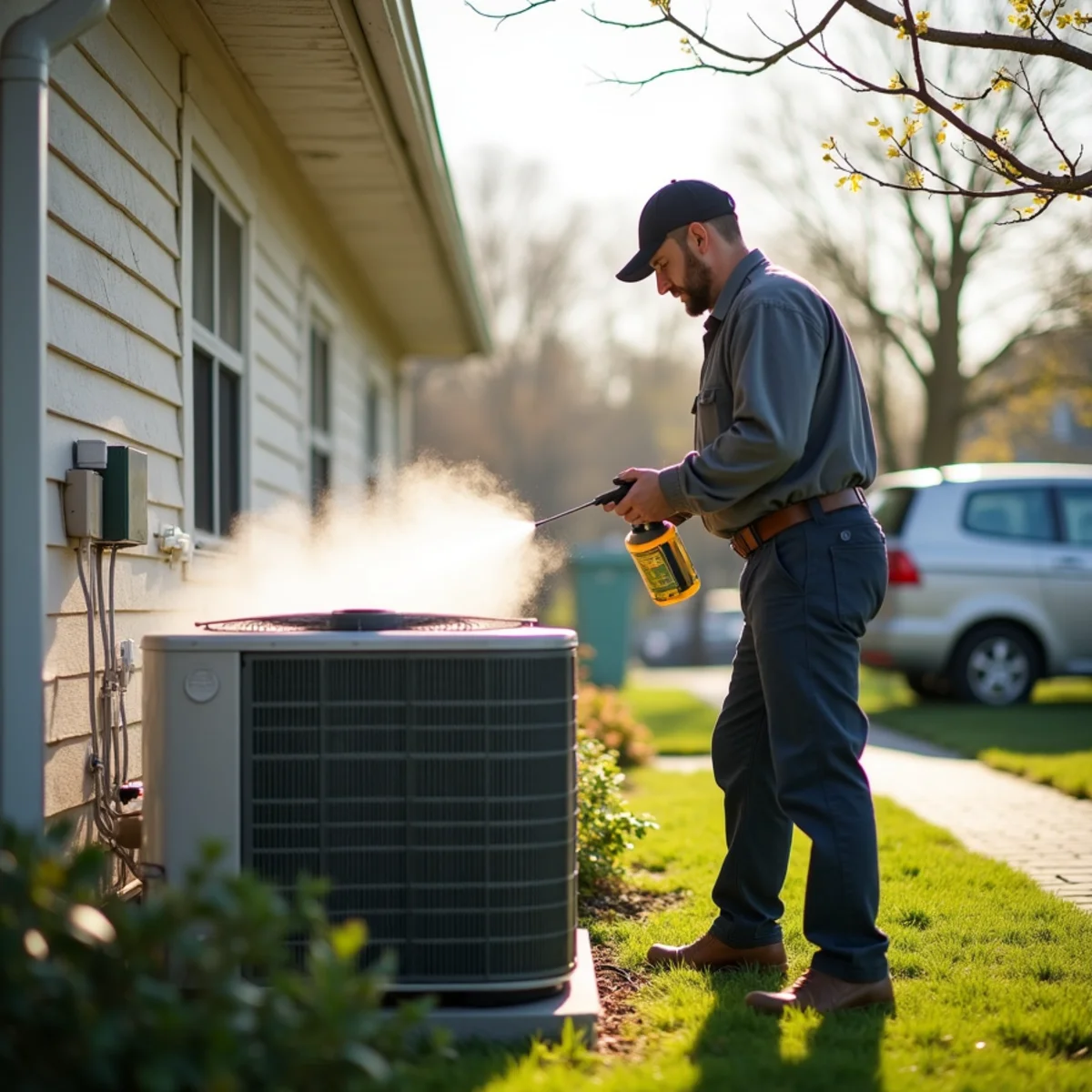
Pottstown summers are not just hot, they are humid. July highs average around 85°F, but the sticky air off the Schuylkill is what makes a house feel miserable, and an air conditioner that cannot pull moisture out of the air will leave you clammy even when the thermostat reads 72. A spring tune-up gets the system ready to handle both heat and humidity before the first heat wave.
The best time to service a central AC is April or May, while the weather is mild and technicians are not slammed with no-cooling calls. This checklist covers what you can safely do yourself and the diagnostics that need meters and gauges.
Why Humidity, Not Just Heat, Is the Enemy Here
An air conditioner does two jobs: it lowers temperature and it removes moisture. In our climate the moisture job matters just as much. When a system is low on refrigerant, has a dirty coil, or is oversized and short-cycles, it cools the air fast but never runs long enough to wring the humidity out. The result is a cold, damp house that still feels sticky.
A spring tune-up checks the parts that control dehumidification, so the system runs steady cycles that actually dry the air instead of racing on and off all afternoon.
Homeowner Steps You Can Do This Spring
Before the first warm week, handle the basics that keep airflow and drainage healthy:
- Replace the air filter, then set a reminder to check it monthly through cooling season.
- Clear leaves, grass clippings, and mulch at least two feet back from the outdoor condenser.
- Gently rinse the outdoor coil fins with a garden hose from the inside out, power off first.
- Make sure the condensate drain line is not clogged and pours to a proper location.
- Check that supply and return registers inside are open and not blocked by furniture.
- Turn the system to Cool on a mild day and confirm the air at the vents feels genuinely cold.
What the Technician Measures
The diagnostics that predict a mid-July failure are readings you cannot take without instruments. A full AC tune-up includes:
- Refrigerant charge verified against the temperature split, not just topped off by guess.
- Compressor and fan motor amp draw compared to nameplate ratings.
- Capacitor testing, since a weak start capacitor is a top cause of a dead condenser in July.
- Coil cleaning on both the indoor evaporator and outdoor condenser for proper heat transfer.
- Condensate drain flush and safety-float switch test to prevent water damage.
- Thermostat calibration and temperature differential across the coil.
Signs Your AC Will Not Survive July As-Is
If you saw any of these last summer, address them now rather than during the first heat advisory when schedules fill up fast.
- The house feels damp even when the temperature is where you set it.
- Warm air from the vents, or air that is cool but weak.
- Ice on the refrigerant line or the indoor coil, a sign of low charge or airflow problems.
- Water pooling near the indoor unit from a backed-up condensate drain.
- The outdoor unit hums but the fan does not spin, often a failed capacitor.
- Cooling bills that climbed sharply for the same weather.
What a Pro Measures That a Homeowner Cannot
Rinsing the condenser and swapping the filter are worth doing, but they are the easy half. The half that predicts a July failure lives inside the refrigerant circuit, and it takes gauges, a thermometer, and a meter to read.
The single most useful number is the temperature split, the difference between the air going into the return and the air coming off the coil. On a properly charged system running in our humidity, that split lands in a healthy window. Too small and the system is likely low on refrigerant or the coil is dirty. Too large and airflow is choked. A homeowner topping off refrigerant by feel is guessing, and an overcharged system dehumidifies worse than a correct one.
From there it is superheat and subcooling to confirm the charge is actually right rather than just full, a capacitor test under load because a capacitor reading fine at rest can still collapse on a 90-degree afternoon, and amp draw on the compressor and condenser fan against the nameplate. Those readings are how we tell a unit that will coast through July from one that will quit during the first heat advisory.
- Temperature split across the evaporator coil, the fastest read on charge and airflow.
- Superheat and subcooling to verify the refrigerant charge is correct, not just present.
- Capacitor microfarad reading under load, since a weak one fails on the hottest days.
- Compressor and fan amp draw compared to the nameplate to catch a straining motor.
- Static pressure and coil condition, because dirty coils quietly kill efficiency.
Why Spring Timing Beats a July Scramble
In Pottstown the cooling season is short but brutal, concentrated in the humid weeks of late June through August. That compression is exactly why timing matters. Book in April or May and a low charge or weak capacitor gets fixed on a comfortable day with parts on the shelf.
Wait for the first heat advisory and you are in line behind every other no-cooling call in the tri-county area, sometimes for days, in the heat, with the house climbing past 80. Spring service is not just cheaper, it is the difference between a scheduled visit and sweating out a wait when demand peaks.
A Note on Older Systems and Refrigerant
If your AC is fifteen years or older and still uses R-22 refrigerant, a spring tune-up is the right moment to talk about the long game. R-22 is phased out and expensive, so a system that loses charge every season is quietly costing you more than it seems. Newer systems use A2L refrigerants and run more efficiently in humid conditions.
A tune-up will keep an aging unit going, but a technician can also give you a straight line-item picture of repair versus replacement so you decide with real numbers, not pressure.
Frequently Asked Questions
April or May is ideal. The weather is mild, technicians have open schedules, and you find any problems before the first July heat wave rather than during a no-cooling emergency.
Usually the system is short-cycling, low on refrigerant, or oversized, so it cools fast but never runs long enough to remove moisture. A tune-up checks charge, airflow, and cycle length to restore proper dehumidification.
Independent ranges typically run about $75 to $200 for a single system, depending on cleaning and any minor adjustments. A firm price should come after an on-site look, and plan members generally pay a reduced rate.
No. A sealed AC system does not consume refrigerant, so needing a top-off every year means there is a leak that should be found and fixed. A tune-up that just adds refrigerant each spring is treating the symptom and leaving the real problem in place.
Yes, carefully. With the power off, rinse the coil fins gently with a garden hose from the inside out and keep grass, mulch, and leaves at least two feet back. Leave the refrigerant, electrical, and any bent-fin repairs to a technician.
A spring tune-up is the difference between a comfortable, dry house in July and a scramble for emergency service during a heat advisory. Get your air conditioner checked while the weather is still mild. Call HVAC Pottstown PA at +1 (327) 210-5999 to book a spring AC tune-up and head off the humid days before they arrive.
Need HVAC service in Pottstown today?
Call HVAC Pottstown PA for fast, honest HVAC service in Pottstown. We answer 24/7 and offer same-day service across Montgomery County.
Keep Reading

Winterize Your Pottstown Home Before the First Freeze
A practical winterizing walkthrough for Pottstown homes, covering the furnace, pipes, drafts, and the freeze-thaw risks that catch older houses off guard every year.
Read more
Fall Furnace Tune-Up Checklist for Pottstown Homeowners
What a real fall furnace tune-up covers in Pottstown, which steps you can safely handle yourself, and the warning signs that mean you should book a technician before the first cold snap.
Read more