
Whole-Home Dehumidifiers: Does Your Pottstown Home Need One?
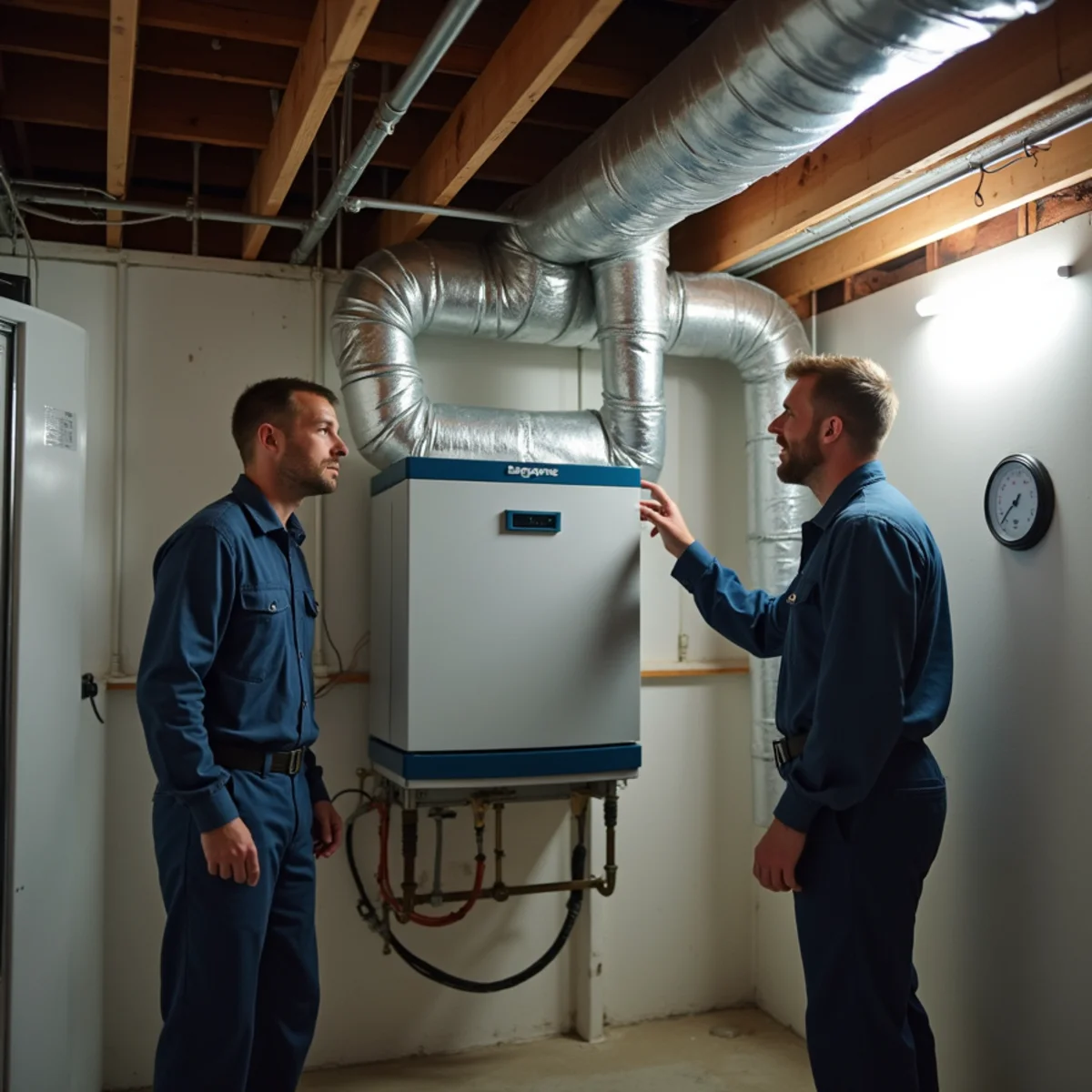
Plenty of Pottstown homes are cool but clammy all summer. The thermostat reads 72, yet the air feels heavy, the basement smells musty, and window portable units run around the clock without keeping up. That is a humidity problem, and it is common here given our damp summers and the moisture that rises off the Schuylkill River and Manatawny Creek.
A whole-home dehumidifier is a different tool than a portable unit or your air conditioner. This guide explains how it works, the signs your home actually needs one, and what to weigh before adding it to your system.
Why an AC Alone Does Not Always Handle It
Your air conditioner removes some moisture as a byproduct of cooling, but only while it runs. On mild, muggy days, the AC satisfies the thermostat quickly and shuts off before it has pulled much water out of the air. Spring and fall are the worst for this, when it is humid but not hot enough to keep the system cycling.
Basements make it harder. Cool below-grade spaces hold moisture, and the AC rarely runs long enough to dry them. That is where a dedicated dehumidifier earns its keep, because it targets humidity directly rather than as a side effect of cooling.
How a Whole-Home Dehumidifier Works
A whole-home unit is installed as part of the HVAC system, usually tied into the ductwork or air handler, and it drains automatically to a condensate line rather than a bucket you empty. You set a target humidity level, and it maintains that level throughout the house independent of whether the AC is cooling.
- It runs on its own humidity setting, not on the temperature the thermostat calls for.
- It drains continuously, so there is no reservoir to empty like a portable unit.
- It treats the whole house or a target zone instead of one room.
- It moves far more moisture per day than a plug-in dehumidifier.
- It runs quieter and out of the way, typically in the basement or utility area.
Signs Your Pottstown Home Might Need One
A few clues point to a moisture load that an air conditioner cannot manage on its own. If several of these sound familiar, a dehumidifier is worth pricing out:
- The house feels sticky even when the temperature is comfortable.
- A musty smell in the basement, closets, or lower level.
- Condensation on windows, ductwork, or cold-water pipes.
- Visible mildew on walls, or clothing and shoes that mildew in closets.
- A portable dehumidifier that fills its bucket several times a day.
- Allergy or asthma symptoms that worsen indoors in humid weather.
The Health and Home-Protection Angle
Humidity is not just about comfort. Sustained indoor moisture above roughly 60 percent feeds mold, dust mites, and mildew, which are common allergy and asthma triggers. It also warps trim, peels paint, and rusts anything metal in the basement.
Keeping indoor humidity in the 45 to 55 percent range protects both the people and the structure. For homes with finished basements or stored belongings below grade, that stability is often the deciding factor.
How the Install Actually Ties Into Your HVAC
Where the technician expertise shows up is in the integration, because a whole-home dehumidifier is not just set in the basement and plugged in. It has to be tied into the air system in a way that moves house air through it and returns it dry, without robbing the furnace and AC of the airflow they need.
There are two common approaches. The unit can be ducted with a dedicated return and supply so it treats the whole house independently, or it can be tied into the return-air side of the existing air handler so the blower helps distribute the dried air. Each has tradeoffs in static pressure, and getting it wrong quietly raises your energy use or starves the AC. The dehumidistat control also has to be wired so it can call for the blower without fighting the thermostat.
Then there is drainage and sizing. The unit produces condensate all day, so it needs a proper gravity drain or a condensate pump to the same discharge your AC uses, sloped and trapped correctly so it never backs up. And sizing is measured in pints of moisture removed per day against your square footage and how wet the space actually is, not just picking the biggest box on the shelf. Oversizing wastes money and short-cycles; undersizing never catches up in August.
- Ducted as a standalone loop, or tied into the air handler's return, depending on the home.
- Static pressure checked so the dehumidifier does not choke the furnace or AC airflow.
- Dehumidistat wired to call for the blower independently of the thermostat.
- A dedicated, trapped condensate drain or pump so it runs unattended all season.
- Capacity in pints-per-day matched to square footage and measured moisture load.
What to Weigh Before You Buy
A whole-home dehumidifier is a real investment, so it should follow an honest look at your home rather than a sales pitch. A technician should confirm the moisture source, size the unit to your square footage, and check that your ductwork and drainage can support it.
- Get the moisture source diagnosed first, since a wet basement may need sealing or drainage too.
- Size the unit to the home, not just to the biggest model available.
- Confirm there is a condensate drain path so it can run maintenance-free.
- Ask for a line-item quote covering equipment, installation, and any duct modifications.
- Consider how it pairs with your existing air conditioner and air quality equipment.
Frequently Asked Questions
Between about 45 and 55 percent is the comfortable, healthy range. Above 60 percent invites mold and dust mites, while much below 40 percent feels dry and can irritate skin and sinuses.
For a persistent, whole-house moisture problem, yes. It moves far more moisture, drains automatically, and treats every room rather than one, though a portable unit can be enough for a single damp room.
In most cases yes. A whole-home unit ties into the ductwork or air handler and shares a condensate drain. A technician should confirm your ducts, drainage, and electrical can support it before installation.
Sometimes, because drier air feels cooler, so many homeowners raise the thermostat a degree or two and the AC runs less. The dehumidifier uses its own energy, but the tradeoff often nets out to better comfort at a similar or lower overall cost in a humid Pottstown summer.
A little. The unit has its own air filter to check and a condensate drain to keep clear, and it should be looked at during your annual HVAC service. It is far less hands-on than emptying a portable unit's bucket every day.
If your home is cool but clammy, or the basement never quite dries out, a whole-home dehumidifier may solve what your air conditioner cannot. The right first step is a moisture diagnosis, not a guess. Call HVAC Pottstown PA at +1 (327) 210-5999 and we will assess your home and give you a straight, line-item answer.
Need HVAC service in Pottstown today?
Call HVAC Pottstown PA for fast, honest HVAC service in Pottstown. We answer 24/7 and offer same-day service across Montgomery County.
Keep Reading
Winterize Your Pottstown Home Before the First Freeze
A practical winterizing walkthrough for Pottstown homes, covering the furnace, pipes, drafts, and the freeze-thaw risks that catch older houses off guard every year.
Read more
Fall Furnace Tune-Up Checklist for Pottstown Homeowners
What a real fall furnace tune-up covers in Pottstown, which steps you can safely handle yourself, and the warning signs that mean you should book a technician before the first cold snap.
Read more