
AC Running But Not Cooling? Pottstown Humidity May Be Why
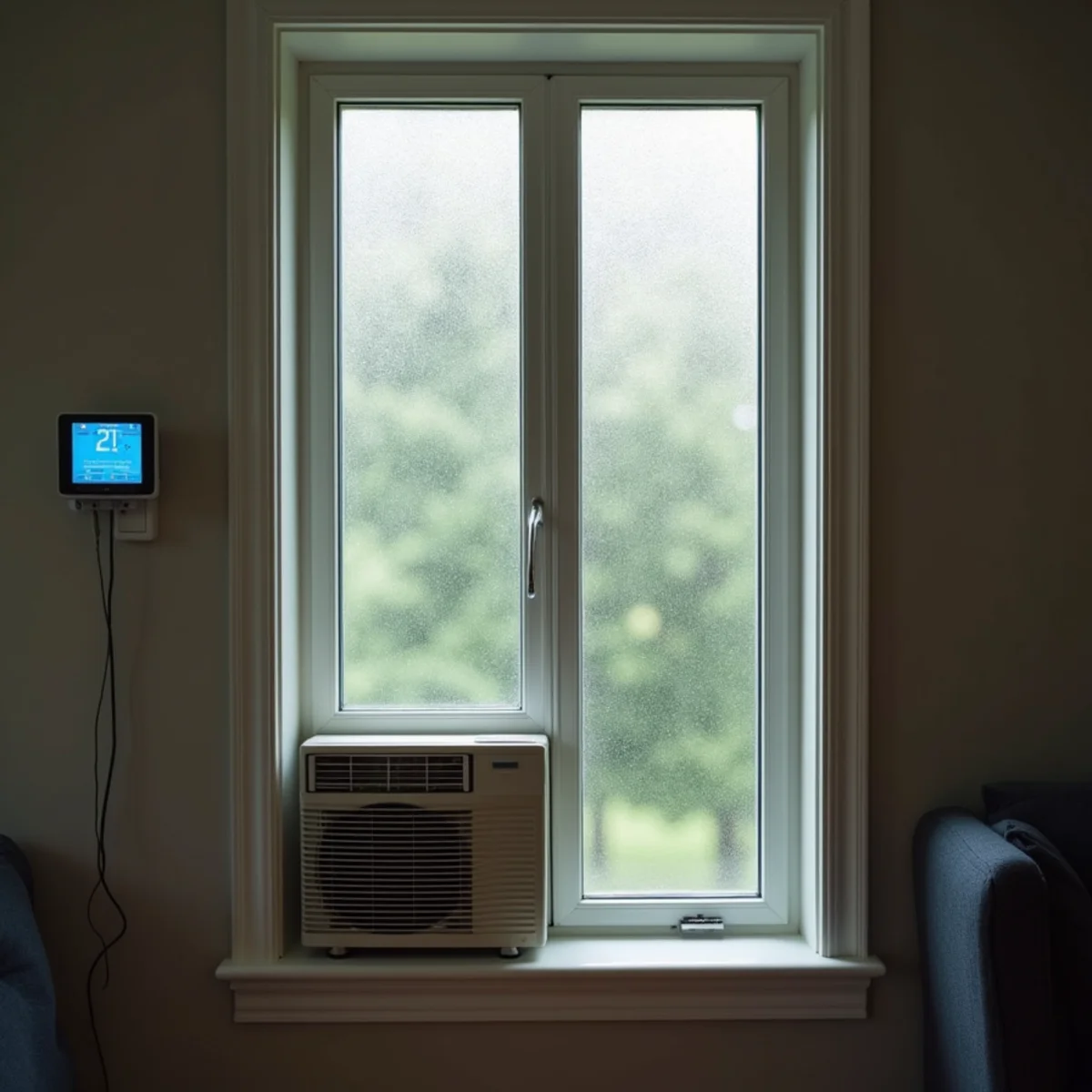
The condenser is humming, air is coming from the vents, and yet the house still feels warm and clammy. This is one of the most confusing summer calls we get, because the system seems to be working. The thermostat says 74, but it feels like 80. In Pottstown, where July highs sit near 85 with heavy humidity off the Schuylkill, the answer is often that your AC is fighting moisture more than temperature.
Air conditioning does two jobs at once: it lowers the temperature and it pulls humidity out of the air. When the second job falls behind, the house feels sticky and warm even when the number on the wall looks fine. Sometimes the cause is simple and homeowner-fixable. Other times it points to airflow, refrigerant, or a system that was never sized for the moisture load. Here is how to narrow it down.
Humidity Is Half the Job
Comfort is about temperature and humidity together. At 50 percent relative humidity, 75 degrees feels pleasant. Push that to 65 percent and the same 75 degrees feels muggy and warm, because your body cannot shed heat through evaporation as easily. Pottstown summers routinely deliver high dew points, so an AC that removes heat but not enough moisture leaves you uncomfortable regardless of the thermostat reading.
A properly running system cools the air across the indoor coil, and moisture condenses out and drains away. If your home feels damp, the system is not dehumidifying effectively, and that usually comes down to airflow, coil condition, refrigerant charge, or oversizing. Each has a different fix.
The Homeowner-Safe Checks
Start with the basics before assuming the worst. These checks are safe and take a few minutes, and they resolve a surprising share of not-cooling calls.
- Air filter: a clogged filter chokes airflow across the coil, cuts capacity, and can freeze the coil. Replace it if it is dirty. This is the number one cause of weak cooling.
- Thermostat setting: make sure it is on Cool and set to Auto, not On. Fan set to On runs air constantly and re-evaporates moisture off the coil, making the house feel more humid.
- Supply and return vents: confirm they are open and unblocked. Restricted airflow reduces both cooling and dehumidification.
- Outdoor unit: check that the condenser is not buried in leaves, grass clippings, or mulch. It needs clear airflow to reject heat.
- Frozen coil: if you see ice on the refrigerant line or indoor coil, turn the system to fan-only to thaw it, then have it checked. Running a frozen system cools poorly and risks the compressor.
When It Points to a Real Fault
If the filter is clean and the airflow is clear but the house still will not cool, the likely causes need a technician. Low refrigerant is common and always means a leak, because refrigerant is not consumed. Simply adding more without finding the leak is a temporary and wasteful fix, and current A2L refrigerants require proper handling under EPA rules. A dirty evaporator or condenser coil, a failing compressor, or a weak blower motor all reduce capacity and dehumidification.
There is also the sizing problem. An oversized air conditioner cools the air fast, satisfies the thermostat, and shuts off before it has run long enough to wring out the humidity. The result is a cold-but-clammy house that short-cycles all afternoon. This is one of the most common issues we find in homes where an AC was replaced with a bigger unit on the assumption that bigger cools better. It does not, and correcting it may mean a right-sized system or added dehumidification.
The Pottstown Summer Factor
Homes near the river and Manatawny Creek deal with elevated ground moisture, and older houses with fieldstone or block basements add humidity from below. That moisture load rides up into living spaces and gives your AC more water to remove than a drier inland home would. It is a real reason two identical systems can feel very different one town over.
The practical takeaway is that in our climate, dehumidification performance matters as much as raw cooling capacity. A correctly sized system that runs longer, gentler cycles pulls out more moisture than an oversized one that blasts and quits. If your house has always felt sticky despite a working AC, the diagnosis is often about run time and sizing, not just a broken part.
How a Technician Measures Whether Your AC Is Really Working
There is a simple field number that tells us a lot before we ever touch a refrigerant gauge: the temperature split across the indoor coil. We measure the air going into the return and the air coming out of a nearby supply, and on a properly running system in our humidity that difference usually lands somewhere around 16 to 22 degrees. A split that is too small points to low refrigerant, a dirty coil, or weak airflow. A split that is unusually large often means the airflow is choked, which is exactly what freezes a coil.
If the split looks off, the next tools come out. We read superheat and subcooling with gauges and a thermometer to judge the refrigerant charge, because those numbers, not a guess, tell us whether the system is low and roughly where. We check static pressure to confirm the blower is moving the air the coil was designed for, and we look at the coil and blower wheel directly, since a layer of dust on either one quietly steals capacity. On humidity complaints we also care about run time, because a system has to run long, steady cycles to pull real moisture out of the air.
For a homeowner, the safe boundary is clear. You can feel whether the supply air is noticeably cooler than the room, check the filter, and look for ice on the lines. Reading superheat, adjusting charge, cleaning a coil chemically, or handling A2L refrigerant all require certification and instruments, and doing them by feel is how compressors get ruined. When your safe checks pass but the house still will not dry out, that measured diagnosis is what finds the real cause.
What Not to Do
Do not try to add refrigerant yourself. It requires EPA certification, proper gauges, and leak detection, and guessing at charge damages the compressor. Do not run the system with a frozen coil hoping it works itself out. And do not keep dropping the thermostat lower and lower, which only makes an already struggling system run longer without addressing the humidity. If the safe checks did not fix it, a measured diagnosis is the efficient next step.
Frequently Asked Questions
Your AC may be cooling but not dehumidifying enough, often from an oversized system, weak airflow, low refrigerant, or a dirty coil. Setting the fan to Auto rather than On also helps moisture drain off the coil instead of re-evaporating.
Yes. An oversized unit cools the air quickly, satisfies the thermostat, and shuts off before it removes humidity, leaving the house cold and clammy. Correct sizing through a load calculation is the real fix.
No. Switch it to fan-only to let the ice thaw, then have it inspected. Running a frozen system cools poorly and can damage the compressor, and the ice usually signals low airflow or low refrigerant.
On a healthy system in our humidity, the air from a supply vent typically runs about 16 to 22 degrees cooler than the air at the return. A much smaller split usually means low refrigerant, a dirty coil, or weak airflow, and is worth having measured.
It can, especially in homes near the river with high ground moisture where even a right-sized AC struggles. But it is worth confirming the AC is sized and running correctly first, since an oversized unit that short-cycles is often the real reason the house stays humid.
An AC that runs but leaves you sticky is usually losing the humidity battle, not just the temperature one. Change the filter, set the fan to Auto, and clear the outdoor unit first. If the house still will not dry out and cool, the cause is likely airflow, refrigerant, or sizing, and each needs measurement. HVAC Pottstown PA delivers straightforward AC repair across Montgomery County with a real diagnosis before any quote. Call +1 (327) 210-5999 to book a visit.
Need HVAC service in Pottstown today?
Call HVAC Pottstown PA for fast, honest HVAC service in Pottstown. We answer 24/7 and offer same-day service across Montgomery County.
Keep Reading
Sizing HVAC for Pottstown's Older Homes: Why Rules Fail
A bigger furnace is not a better furnace. Here is why square-footage rules of thumb fail in Pottstown's older homes and how Manual J, S, and D right-size a system in plain English.
Read more
Uneven Heat in Pottstown Twins: Ductwork Fixes That Work
Freezing bedrooms upstairs while the living room bakes is one of the most common complaints in Pottstown's twins and rowhomes. Here is what actually causes it and the ductwork fixes that hold up.
Read more