
Uneven Heat in Pottstown Twins: Ductwork Fixes That Work
You keep the thermostat downstairs at a comfortable 70, but the upstairs bedrooms sit at 62 and the back room never warms at all. Or the reverse: the first floor bakes while the top floor freezes. Uneven heat is one of the most common complaints we hear in Pottstown's twins and rowhomes, and it is almost always a ductwork and airflow problem, not a broken furnace.
The good news is that most of these homes can be balanced without ripping everything out. The bad news is that the internet's favorite quick fixes, like closing vents in warm rooms, often make it worse. Here is what actually causes uneven heat in our older narrow homes and which fixes genuinely hold up.
Why Older Homes Heat Unevenly
Pottstown's twins and rowhomes were often heated by systems added and modified over many decades. A furnace gets replaced, a room gets finished, a duct gets extended, and nobody recalculates the airflow. The result is a duct system that delivers plenty of air to some rooms and a trickle to others. Physics does the rest: warm air rises, so upper floors can overheat in some homes and starve in others depending on where the supplies and returns landed.
These narrow homes also tend to have long duct runs squeezed into tight chases, shared walls with neighbors, and limited return air paths. A single return grille on the first floor cannot pull enough air back from sealed upstairs bedrooms, so those rooms pressurize, airflow stalls, and they stay cold. Understanding the cause matters, because it points to which fix will actually work.
What to Check First
Before assuming a big ductwork project, rule out the simple stuff. These are safe to check yourself and occasionally solve the whole problem.
- Filter and airflow: a clogged filter weakens delivery to the farthest rooms first, which are usually the cold ones. Replace it.
- Register dampers: many supply registers have a small lever. Make sure the cold rooms' registers are fully open and the hot rooms are not blasting wide open with no balance.
- Furniture and rugs: a bed, dresser, or rug over a supply or return grille chokes airflow to that room.
- Closed doors: bedrooms with no return path and a closed door pressurize and lose airflow. Undercut doors or transfer grilles help.
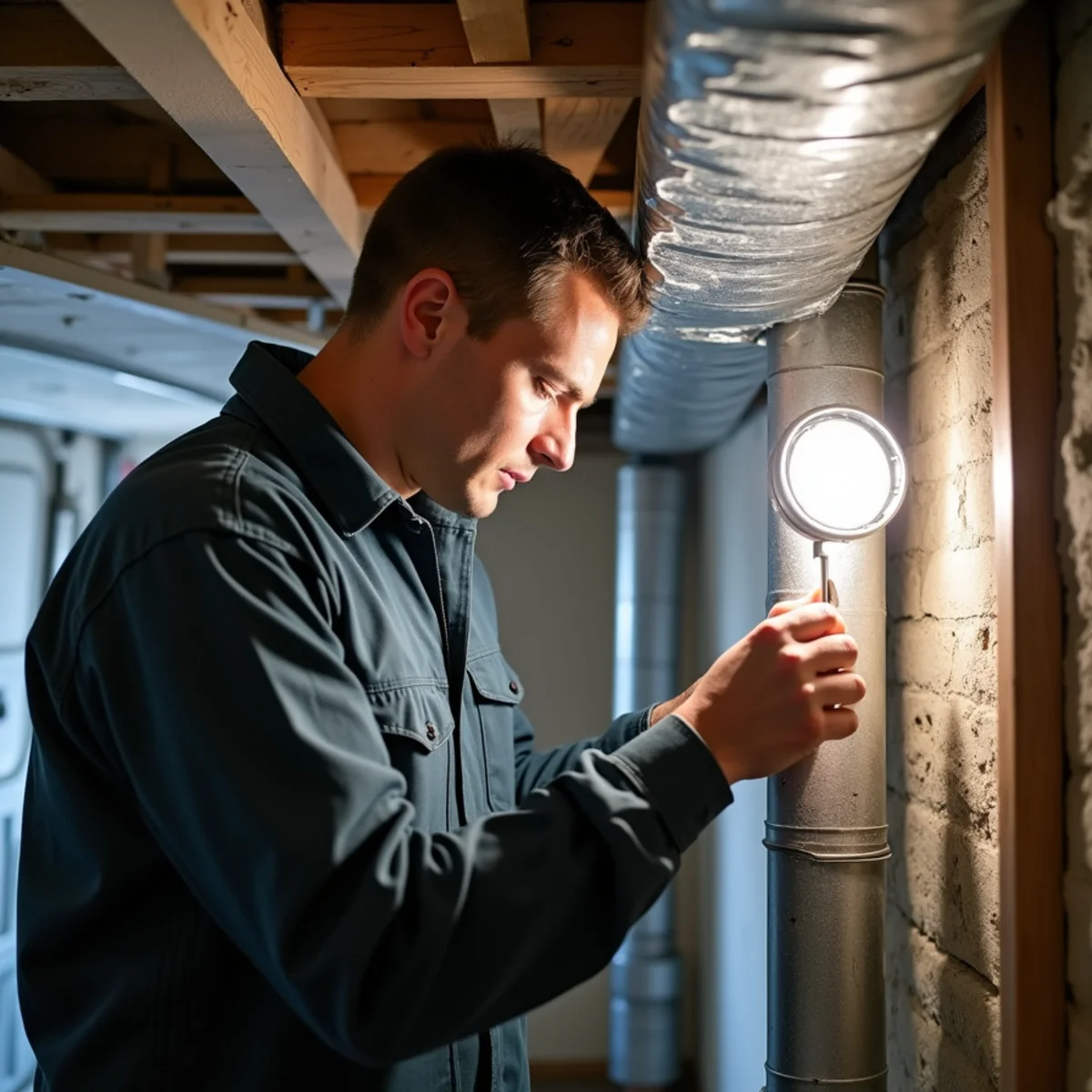
- Obvious duct damage: in the basement, look for disconnected or crushed flex duct and gaps at joints where heated air dumps into the basement instead of the bedroom.
The Ductwork Fixes That Actually Work
When the simple checks are not enough, the durable fixes address airflow and balance rather than masking the symptom. The first is sealing. Older duct systems leak badly at joints, and a system that dumps 20 percent of its heated air into the basement or wall cavities will never reach the far bedrooms. Properly sealing and insulating accessible ductwork often makes the single biggest difference in an older home.
The second is balancing dampers. Instead of closing registers by hand, a technician installs adjustable dampers in the trunk lines and tunes airflow so the near rooms give up a little and the far rooms get more. The third is correcting return air, often by adding a return upstairs so the system can actually pull air back from the cold floor. In the toughest cases, a room that no duct will ever reach well is a good candidate for a ductless mini-split, which delivers heat directly without fighting the whole duct layout.
- Seal and insulate leaky ducts, especially in the basement and unconditioned chases.
- Add or adjust balancing dampers in the trunk lines rather than closing registers.
- Improve return air, often by adding an upstairs return grille.
- Right-size registers and boots on starved rooms.
- Consider a ductless mini-split for a stubborn room that ductwork cannot reach.
The Fixes That Backfire
Closing vents in warm rooms feels logical but usually backfires. It raises static pressure across the whole system, which strains the blower, can trip the furnace limit, and often forces conditioned air out through duct leaks rather than into the cold rooms. Cranking the thermostat higher just overheats the already-warm rooms while the cold ones creep up slowly.
Space heaters are a stopgap, not a fix, and running several of them signals a duct problem worth solving properly. A whole-house balancing job costs less over a few winters than the electric bills and comfort of fighting the symptom. The right approach is measuring airflow room by room and correcting the delivery, which is exactly what a duct diagnosis does.
What a Real Duct Diagnosis Involves
The reason vent-closing and thermostat-cranking fail is that they treat a comfort complaint without ever measuring the airflow, and airflow is the whole game. When we diagnose uneven heat, the first instrument out is a static-pressure gauge. We read the pressure the blower is working against, because a system choked by undersized ducts or a dirty coil cannot deliver to the far rooms no matter what you do at the registers. That single number often reframes the whole problem.
From there we measure room by room. We take supply temperatures and airflow at each register, so instead of you telling us a bedroom feels cold, we can show that it is getting a fraction of the air it needs while another room is overblown. We inspect accessible ductwork for the leaks and disconnects that dump heat into the basement, and we look at the return side, which is the piece most homeowners never think about and the one that most often starves an upstairs floor. The measurements tell us exactly where to seal, where to add a damper, and where a return is missing.
For a homeowner, the safe checks are the ones in the section above: filters, register dampers, blocked grilles, closed doors, and visible duct damage in the basement. Reading static pressure, measuring room airflow, sealing ducts inside walls, and cutting in a new return are technician work. The value of the diagnosis is that it replaces trial and error with a map, so the money goes toward the fix that actually moves the air rather than another space heater.
The Local Angle
Around the High Street Historic District, we see a lot of three-story rowhomes where the top floor was the last to get central air and heat, often on the tail end of a long duct run. Those upper rooms are the classic cold-in-winter, hot-in-summer complaint, and they respond well to a combination of sealing, a dedicated return, and balanced dampers. The homes are worth doing right rather than patching, and the fixes preserve the character of the space without invasive demolition.
Frequently Asked Questions
Usually the upstairs is not getting enough airflow, from leaky or undersized ducts, a long duct run, or poor return air. Warm air also rises, so a poorly balanced system exaggerates the difference. Sealing, dampers, and an added return typically fix it.
Generally no. Closing vents raises system pressure, strains the blower, and often forces air out through duct leaks instead of into the cold rooms. Balancing dampers tuned by a technician are the proper way to redirect airflow.
Often yes. Duct sealing, added balancing dampers, and improved return air solve most cases in older homes. A ductless mini-split is a good option for a single stubborn room that ductwork cannot reach well.
It often is when a room sits at the end of a long duct run that no amount of balancing will fully serve. A single-zone ductless mini-split delivers heating and cooling straight to that room without fighting the whole duct layout, and it runs efficiently on its own thermostat.
In older Pottstown homes it is frequently the biggest single improvement. Leaky ducts can dump a large share of your heated air into the basement and wall cavities before it ever reaches the far rooms, so sealing them puts that air back into the living space where you paid to send it.
Uneven heat in an older Pottstown twin or rowhome is a solvable airflow problem, not a life sentence of cold bedrooms and space heaters. Skip the vent-closing trick and start with a real duct diagnosis: sealing, balancing, and return air do the heavy lifting. HVAC Pottstown PA handles ductwork repair and balancing throughout town and knows these historic homes well. Call +1 (327) 210-5999 and we will measure the airflow before recommending a fix.
Need HVAC service in Pottstown today?
Call HVAC Pottstown PA for fast, honest HVAC service in Pottstown. We answer 24/7 and offer same-day service across Montgomery County.
Keep Reading
AC Running But Not Cooling? Pottstown Humidity May Be Why
When the AC runs all day but the house stays warm and sticky, humidity is often the hidden culprit. Here is how Pottstown's muggy summers factor in and what to check.
Read more
Sizing HVAC for Pottstown's Older Homes: Why Rules Fail
A bigger furnace is not a better furnace. Here is why square-footage rules of thumb fail in Pottstown's older homes and how Manual J, S, and D right-size a system in plain English.
Read more