
Frozen Pipes in Pottstown: Prevention & Same-Day Thaw Response
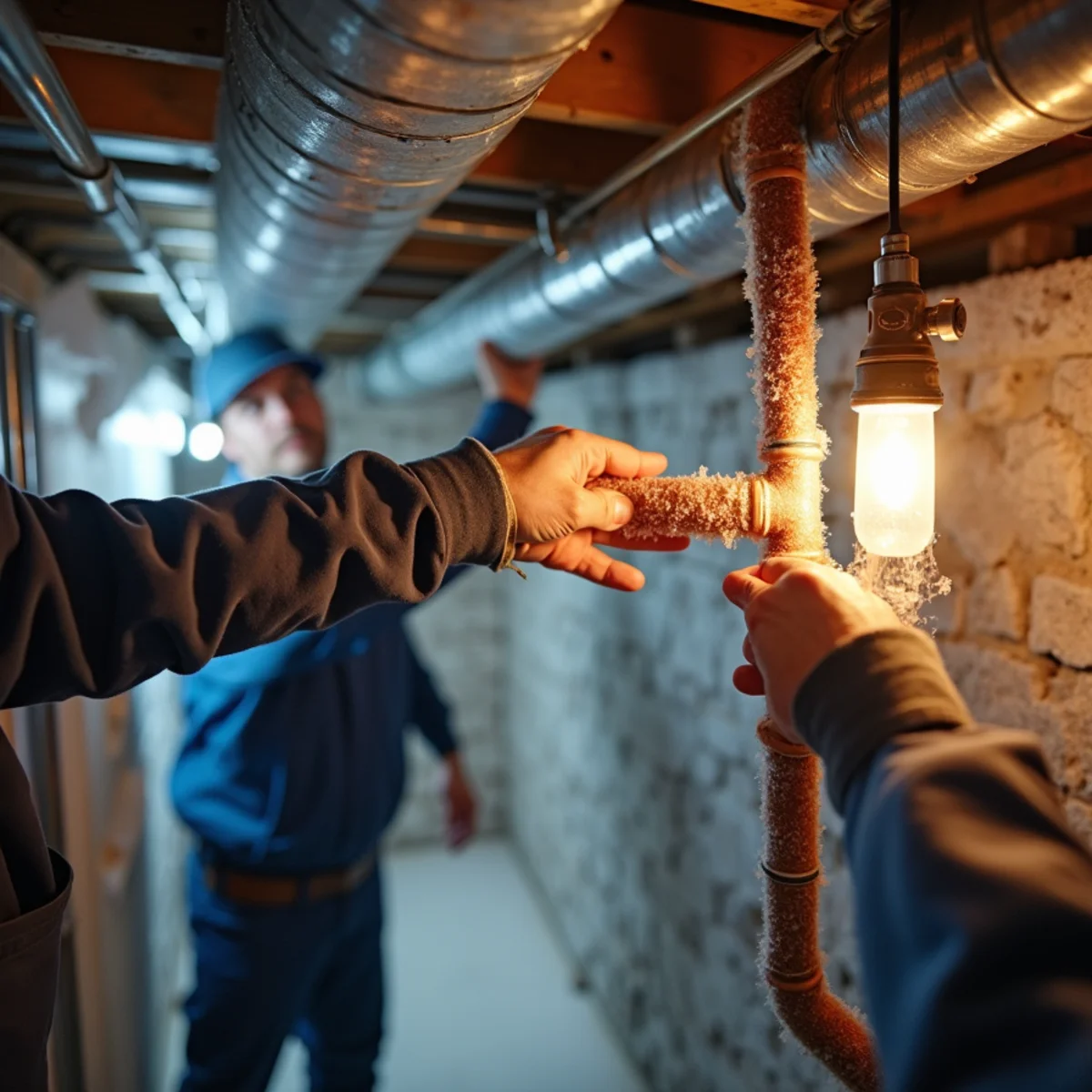
A frozen pipe rarely announces itself. One tap runs fine, the next gives you a trickle or nothing at all, and the ice you cannot see is already expanding against the walls of the line. In Pottstown, where freeze-thaw swings and riverfront humidity gang up on older plumbing, this is one of the most common winter emergencies we get called for.
The good news is that frozen pipes are largely preventable, and when one does freeze, a measured response can often save you from a burst and a flooded floor. Here is how we think about both halves of the problem.
Why Pottstown Homes Freeze
This town's housing stock works against you in a cold snap. Historic brick twins and rowhomes along High Street were built long before anyone insulated an exterior wall, and their supply lines often run through uninsulated cavities and unconditioned crawlspaces. Add the humidity and flood exposure near the Schuylkill and Manatawny Creek, and pipes in the riverfront district sit in some of the dampest, coldest framing in the borough.
The physics is simple. Water expands as it freezes, and the pressure it builds has nowhere to go inside a rigid pipe. The break often happens between the ice plug and a closed faucet, which is why a pipe can burst even where it has not frozen. Older copper and galvanized lines are especially unforgiving.
Prevention Before the Cold Sets In
Most of what protects your plumbing is cheap and simple, and it pays for itself the first time a hard freeze rolls through:
- Insulate exposed pipes in basements, crawlspaces, and garages with foam sleeves; pay special attention to lines on exterior walls.
- Seal drafts where cold air reaches plumbing, including rim joists, sill plates, and gaps around where pipes penetrate walls.
- Disconnect garden hoses and shut off and drain outdoor spigots before the first freeze.
- Keep the house at a steady temperature day and night during a cold snap rather than setting back deeply at night.
- Know where your main water shutoff is, and make sure it turns freely, before you ever need it in a hurry.
Getting Heat to the Pipes
A frozen line is often a symptom of a heating problem, a room that never gets warm, a register that a renovation closed off, or a furnace that is under-delivering to one zone. Keeping the whole envelope warm is the surest prevention, so a home that is chronically cold in one corner is worth a professional look at both the ductwork and the heating system.
During an active freeze warning, open the cabinet doors under sinks on exterior walls so household heat can reach the pipes, and let vulnerable faucets drip. A pencil-thin stream of moving water is often enough to keep a marginal line from freezing solid overnight.
You Found a Frozen Pipe. Now What?
If a faucet gives you only a dribble on a cold morning, you likely have a partial freeze. Act while it is still catchable:
- Open the affected faucet so that, as the ice melts, water and pressure have somewhere to escape.
- Apply gentle, even warmth to the accessible frozen section using a hair dryer, warm towels, or a portable space heater kept at a safe distance from anything flammable.
- Work from the faucet end back toward the frozen area so meltwater can drain as you go.
- Never use an open flame, a blowtorch, or a propane heater on a pipe. That is how house fires start, and it can crack the pipe.
The Overlap Between Frozen Pipes and Your Heating System
Homeowners tend to file frozen pipes under plumbing and heat problems under HVAC, but on the ground the two are tangled together. A pipe freezes because a section of the house is not getting enough heat, and that shortfall usually traces to something on the mechanical side: a supply register a past remodel drywalled over, a duct run that was never balanced, a furnace a size too small for an addition, or a boiler zone whose circulator has quit. When we get a repeat-freeze call, we look at heat delivery to that corner of the house before we blame the plumbing.
The fix is often unglamorous. Rebalancing dampers, opening or adding a register, sealing return leaks that pull cold air across a pipe chase, or correcting an undersized run can raise the temperature in a problem wall by several degrees, and that is frequently the margin between a pipe that freezes every January and one that never does. In the older twins and rowhomes along High Street, where duct and pipe runs share the same uninsulated cavities, this kind of measured airflow work pays for itself the first winter it prevents a burst.
When to Stop and Call
If you cannot reach the frozen section, if it sits inside a finished wall, or if a pipe has already split and water is escaping, shut off the main immediately and call for help. A hidden freeze behind drywall or under a floor is not a place for guesswork, and a burst line can put gallons into your home in minutes.
We treat a heat outage and a freeze risk as the same emergency, because in a Pottstown winter they usually arrive together. Getting your heat restored is often the fastest way to protect the rest of the plumbing in the house.
Frequently Asked Questions
Exposed pipes are generally at risk once outdoor temperatures drop below about 20°F, and sooner if they run through unheated, drafty spaces. Older homes near the river tend to freeze earlier than newer, tighter construction.
If the frozen section is exposed and accessible, gentle warmth and an open faucet are reasonable first steps. If it is inside a wall, you cannot find it, or a pipe has already burst, shut the main and call rather than risk a bigger failure.
Yes. A room that never warms up, a blocked register, or an underperforming furnace can leave nearby plumbing chronically cold. If one area freezes repeatedly, the heating system and ductwork deserve a professional look.
A pipe that freezes repeatedly is sitting in framing that never gets warm enough, often because of a closed-off register, an unbalanced duct run, or an undersized heating system. Fixing the heat delivery to that area, not just insulating the pipe, is what stops the pattern for good.
Frozen pipes are one of the few winter emergencies you can genuinely get ahead of, and one of the few where a fast, calm response makes all the difference. Insulate now, keep the whole house warm, and know where your shutoff is. When a line freezes past what you can safely reach, or your heat goes out during a cold snap, call HVAC Pottstown PA at +1 (327) 210-5999 for same-day help.
Need HVAC service in Pottstown today?
Call HVAC Pottstown PA for fast, honest HVAC service in Pottstown. We answer 24/7 and offer same-day service across Montgomery County.
Keep Reading
Ice Storms & Power Outages: Keeping Pottstown Homes Warm When the Grid Drops
A practical guide to riding out an ice-storm power outage in Pottstown: safe ways to stay warm, protect your plumbing, and restart your heating system.
Read more
AC Failure During a Montgomery County Heat Wave: Your First 5 Steps
When the AC dies during a Montgomery County heat wave, these five ordered steps keep your household safe and cool while you sort out the repair.
Read more