
Furnace Short-Cycling in Pottstown: Causes & Fixes
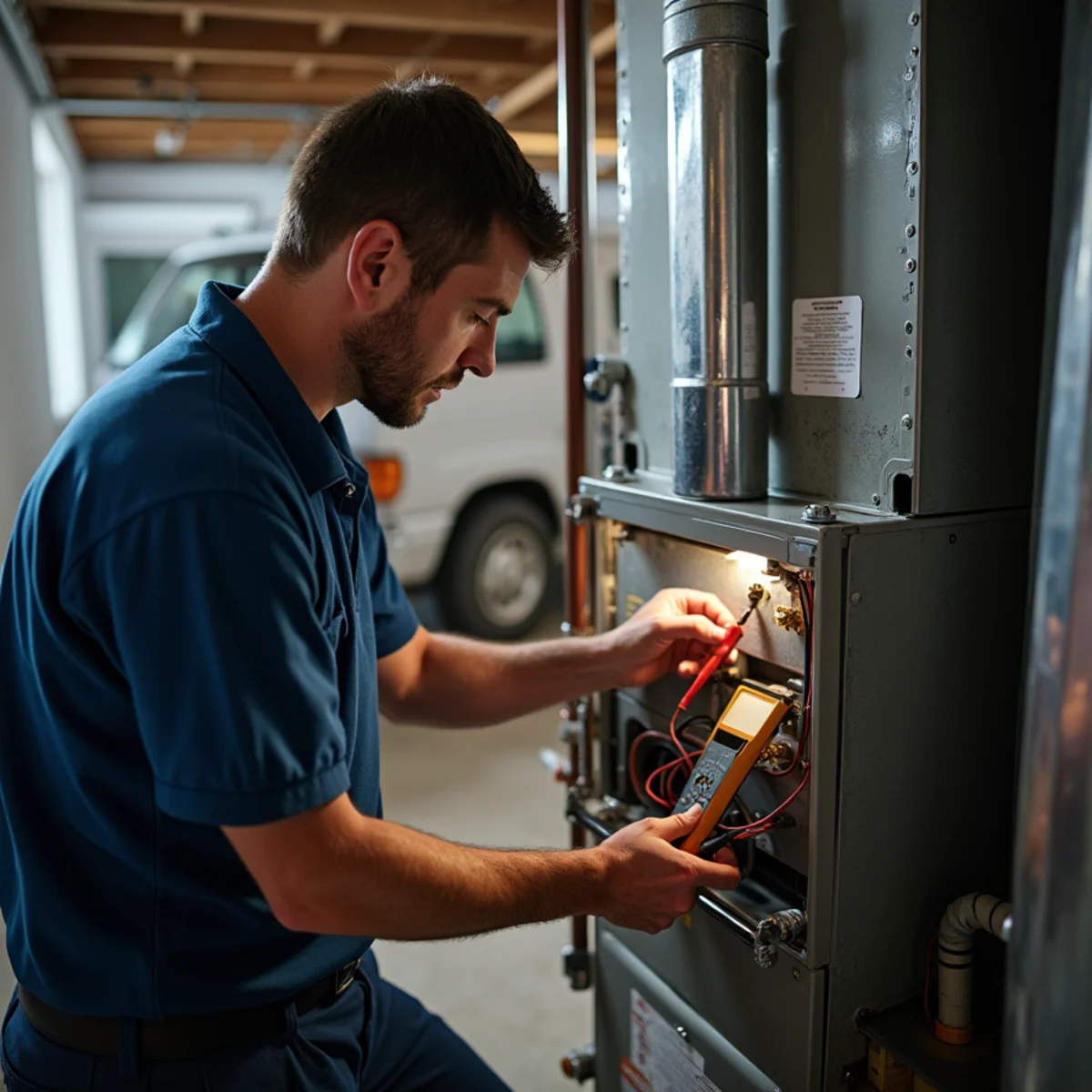
Your furnace fires up, runs for two or three minutes, shuts down, then starts the whole dance over again a few minutes later. That pattern is called short-cycling, and during Pottstown's freeze-thaw stretch it shows up on our call sheet almost daily. The house never quite warms, the burner keeps slamming on and off, and the equipment ages years in a single winter.
Short-cycling is a symptom, not a diagnosis. A few causes are simple enough to check yourself in five minutes. Others point to a control board, flame sensor, or heat exchanger issue that needs a technician and a meter. Here is how to tell the two apart safely.
What Short-Cycling Actually Is
A gas furnace is supposed to run a steady cycle: call for heat, ignite, warm the exchanger, run the blower, and shut down once the thermostat is satisfied. A healthy cycle in cold weather usually lasts ten to fifteen minutes. When your furnace instead runs for only a minute or two and quits repeatedly, a safety is tripping or the thermostat is losing its signal.
The reason it matters beyond comfort is wear. Ignition and startup are the hardest moments on a furnace. Doubling or tripling the number of starts per hour hammers the igniter, blower motor, and control board, and it drives up your gas use because the system never reaches efficient steady-state operation.
The Simple Causes You Can Check
Before anything else, rule out safety. If you smell gas, notice a sharp odor, or a carbon monoxide alarm is sounding, leave the house and call for help from outside. Do not keep restarting the unit. If there is no safety concern, work through these homeowner-safe checks in order.
- Air filter: a clogged filter starves the furnace of airflow, overheats the heat exchanger, and trips the high-limit switch. If the filter is gray and packed, swap it. This is the single most common fix we see.
- Thermostat location: a thermostat sitting in direct sun, near a supply vent, or above a heat source reads the wrong temperature and satisfies too early. Note whether it is placed somewhere odd.
- Thermostat batteries: weak batteries cause dropped signals that look exactly like short-cycling. Replace them if the display is dim or flickering.
- Supply vents: closing off too many registers to save on unused rooms can spike static pressure and trip the limit. Keep the majority open.
- Return airflow: furniture or rugs blocking return grilles chokes the same airflow a dirty filter does.
The Causes That Need a Technician
If a fresh filter and a good thermostat did not settle things, the remaining causes involve components you should not open or bypass. A dirty or failing flame sensor is one of the most frequent culprits: it stops proving flame a few seconds after ignition, so the control board shuts the gas valve as a safety response, then retries. That cleaning belongs to a technician with the panel off and the power handled correctly.
An overheating high-limit switch points to an airflow problem deeper than the filter, sometimes a weak blower motor or a partially blocked heat exchanger. A cracked heat exchanger is a serious safety concern because it can leak combustion gases, and it is never a DIY inspection. A failing control board or a flaky flame rollout switch also produces the on-off pattern. Each of these needs a meter and combustion analysis to diagnose correctly.
Why Pottstown's Freeze-Thaw Season Makes It Worse
Our winters do not sit at a steady cold. Temperatures swing above and below freezing, sometimes within a single day, and that pattern stresses furnaces in specific ways. High-efficiency condensing furnaces produce acidic condensate that drains through a small trap and line. When the mercury drops overnight, a condensate line running near an exterior wall or through an unheated crawlspace can freeze, back up, and trip the pressure switch, which reads exactly like short-cycling.
Older brick twins and rowhomes along the historic corridor add their own wrinkle. Long duct runs, uninsulated basements, and drafty envelopes mean the furnace works harder to hit setpoint, so any small airflow restriction tips it into a limit trip faster than it would in a tight newer home. If your short-cycling started with the first hard freeze, a frozen condensate line or a pressure-switch issue is worth ruling out early.
How a Technician Actually Diagnoses It
When the homeowner-safe checks come up empty, this is where measurement replaces guessing, and it is worth knowing what a real diagnosis looks like so you can tell a parts-swapper from a technician. We do not start by throwing parts at the furnace. We start with a temperature-rise reading across the heat exchanger. Every furnace has a rated rise range on the data plate, usually something like 35 to 65 degrees. A rise that runs too high confirms an airflow restriction is tripping the high-limit, which points the investigation toward the blower, the ducts, or a plugged coil rather than the burner.
Next comes the flame sensor. A healthy sensor produces a small, steady microamp signal that tells the control board flame is present. We put a meter in series and read that current directly. A reading that starts fine and then drifts down over a few seconds is the fingerprint of a dirty or degraded sensor, and it explains an ignition-then-lockout pattern almost perfectly. From there we check gas manifold pressure with a manometer, verify the pressure switch and its tubing on condensing units, and run a combustion analysis to confirm the burner is firing cleanly and safely.
The line between what you can check and what we check comes down to tools and safety. You can change a filter, clear returns, and swap a thermostat battery with the power off. Reading flame current, testing gas pressure, inspecting a heat exchanger for cracks, and clearing a frozen condensate trap all require the panel off, the power managed correctly, and instruments most homeowners do not own. If your checks did not fix it, that is the honest handoff point, not a failure on your part.
What Not to Do
Do not keep resetting a furnace that repeatedly locks out. The lockout is a protective response, and forcing it back on can turn a minor fault into a damaged board or a safety hazard. Do not tape over or jumper a limit switch, do not run the system with the door panel off, and never ignore a carbon monoxide alarm because you assume it is nuisance. If the furnace has locked out more than once or twice, stop and call for a diagnosis.
Frequently Asked Questions
It can be both. Some causes are harmless like a dirty filter, but others such as an overheating limit or a cracked heat exchanger are safety concerns. If a new filter does not fix it, have it diagnosed before the repeated lockouts damage the system.
In cold weather, a healthy furnace usually runs about ten to fifteen minutes per cycle. Runs of only one to three minutes that repeat several times an hour are short-cycling and worth investigating.
Yes. On high-efficiency furnaces a frozen or blocked condensate line backs up and trips the pressure switch, which stops and restarts the burner. This is common during Pottstown cold snaps and needs a technician to clear and reroute safely.
Sometimes. A failing thermostat or weak batteries can cause it, so replacing them is worth trying. But if the furnace is tripping on a limit or a flame-sense fault, a new thermostat will not help, which is why a measured diagnosis matters before spending on parts.
Largely, yes. Annual maintenance cleans the flame sensor, checks airflow and gas pressure, and clears the condensate path before winter, which heads off the most common causes of short-cycling. Neglected furnaces are the ones that surprise homeowners on the first hard freeze.
Short-cycling is your furnace telling you something is off, and the fix ranges from a five-dollar filter to a control-board diagnosis. Change the filter and check the thermostat first. If the on-off pattern continues, do not keep resetting it. HVAC Pottstown PA provides measured, line-item furnace repair across Montgomery County, and we will diagnose the actual cause before quoting a dime. Call +1 (327) 210-5999 to schedule a visit.
Need HVAC service in Pottstown today?
Call HVAC Pottstown PA for fast, honest HVAC service in Pottstown. We answer 24/7 and offer same-day service across Montgomery County.
Keep Reading
AC Running But Not Cooling? Pottstown Humidity May Be Why
When the AC runs all day but the house stays warm and sticky, humidity is often the hidden culprit. Here is how Pottstown's muggy summers factor in and what to check.
Read more
Sizing HVAC for Pottstown's Older Homes: Why Rules Fail
A bigger furnace is not a better furnace. Here is why square-footage rules of thumb fail in Pottstown's older homes and how Manual J, S, and D right-size a system in plain English.
Read more