
Heat Pump Defrost Mode: What's Normal in Winter
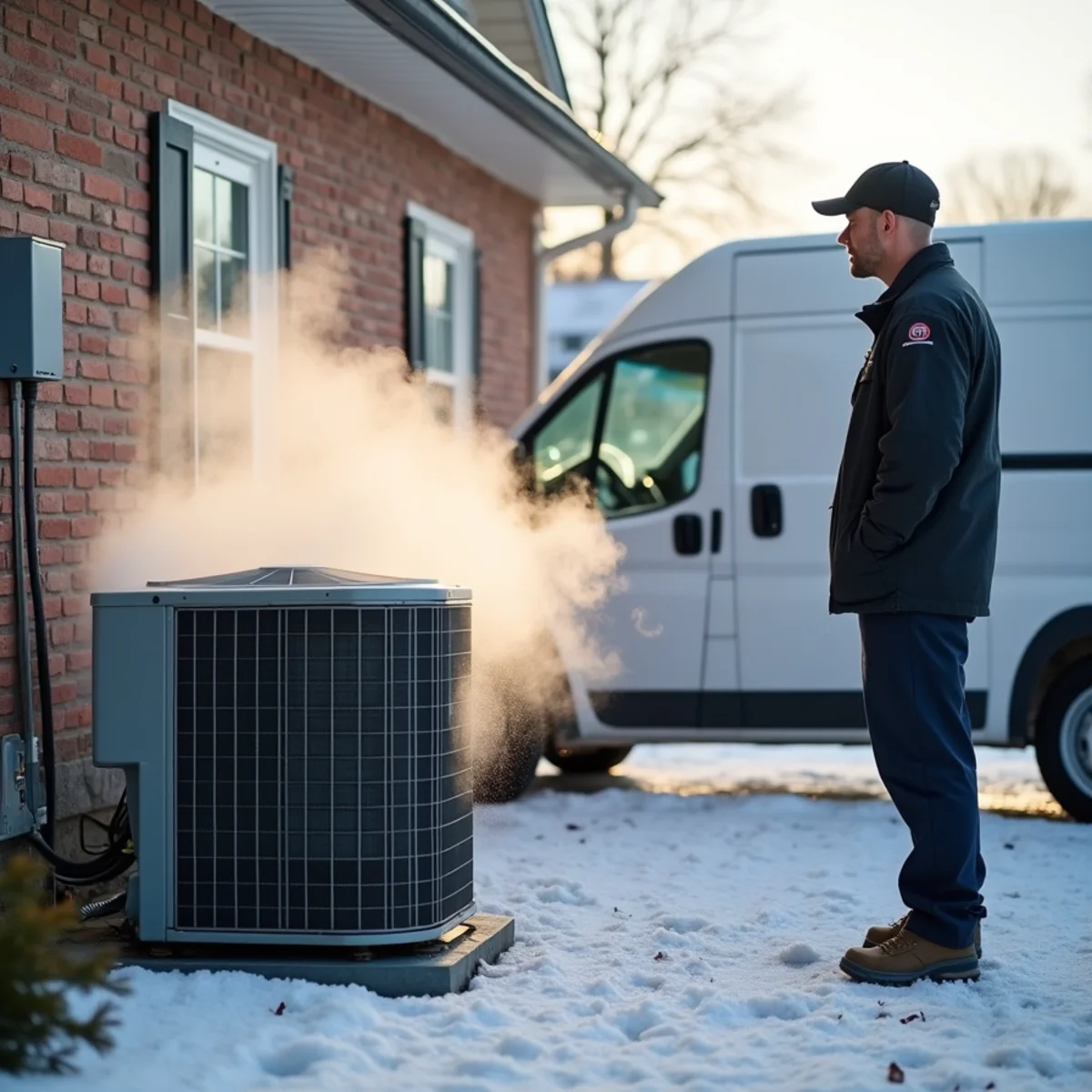
You look out the window on a cold morning and your heat pump is steaming like it is on fire, the outdoor fan has stopped, and the air from the vents turned cool for a minute. Your first instinct is that something broke. In most cases, nothing is wrong at all. What you are watching is defrost mode, a normal and necessary part of how a heat pump works in a Montgomery County winter.
Heat pumps are more common around Pottstown every year, and they behave differently from a gas furnace. Understanding defrost saves you an unnecessary service call and helps you spot the rare case when defrost really is misbehaving. Here is what is normal, what the steam and cool air mean, and the signs that warrant a technician.
How a Heat Pump Makes Heat
A heat pump does not burn fuel. It moves heat from the outdoor air into your home using refrigerant, even when it is cold outside. As it pulls heat from the outdoor air, the outdoor coil gets very cold, often below freezing. Moisture in the air then condenses and freezes onto that coil as frost, especially on damp days in the 20s and 30s, which describes a lot of our winter mornings.
A frosted coil cannot absorb heat efficiently, so the system periodically runs a defrost cycle to melt it off. This is by design, not a malfunction. The frequency depends on temperature and humidity, and our freeze-thaw, high-moisture winters trigger defrost more often than a dry cold climate would.
What Normal Defrost Looks Like
During defrost, the system briefly reverses so the outdoor coil warms up and melts the frost. Here is what you will typically see and hear, all of it normal:
- Steam or vapor rising off the outdoor unit as frost melts. It looks dramatic but it is just water vapor, not smoke.
- The outdoor fan stopping while the compressor keeps running.
- A whooshing or clunking sound as the reversing valve switches. A one-time thunk each cycle is normal.
- Cooler air from your vents for a minute or two, which is why many systems briefly run backup heat during defrost to keep the supply air warm.
- A puddle or ice patch forming under the unit as melted frost drains away.
- Cycles lasting a few minutes and happening anywhere from every 30 to 90 minutes in the right conditions.
When Defrost Is a Problem
Defrost becomes a red flag when it stops working or runs constantly. If the coil ices over completely and stays encased in a solid block of ice that never clears, the defrost cycle is failing, often from a bad sensor, a stuck reversing valve, low refrigerant, or a control fault. A fully iced unit cannot make heat and will run your backup electric strips nonstop, which shows up as a shocking electric bill.
Watch for these signs that it is more than normal frost. Each one is worth a technician's attention rather than waiting it out.
- The outdoor unit is fully encased in ice, not just lightly frosted, and never clears.
- The system runs defrost far more often than every half hour, or seems stuck in it.
- The house is not staying warm and the backup heat runs continuously.
- Loud grinding, screeching, or a reversing valve that hisses and never completes the switch.
- Ice building up on the top of the unit or on the fan blades, which can damage the fan.
What You Can Do Safely
There are a few homeowner-safe things that help a heat pump defrost properly. Keep the area around the outdoor unit clear of snow drifts, leaves, and debris so air moves freely. Make sure the unit is not sitting where roof runoff drips onto it and refreezes. If a heavy snow buries the coil, you can gently clear snow away by hand once the system is off, but never chip at ice with a tool, which punctures the coil.
Do not pour hot water over an iced unit in freezing weather, which refreezes and worsens the problem, and never turn off the unit and restart it repeatedly hoping to force defrost. If the coil is a solid block of ice, switch to your backup heat if you have it and call for service. The underlying fault will not fix itself.
How We Diagnose a Real Defrost Fault
When a homeowner calls about a unit that stays iced, we are really checking whether the defrost cycle can start, run, and finish correctly, and each of those steps has a part behind it. Most systems decide to defrost using a coil temperature sensor and either a timer or demand logic on the control board. We test that sensor against a known temperature and confirm the board is calling for defrost when it should. A sensor reading wrong, or a board that never initiates, leaves the coil to ice up unchecked.
The other half is the reversing valve, the component that flips the system into cooling for a few minutes to warm the outdoor coil. If that valve sticks or only partially shifts, the coil never gets warm enough to shed its frost, and you hear a long hiss instead of a clean thunk. We also read the refrigerant charge, because a low system frosts harder and defrosts poorly, and we verify the outdoor fan and the backup heat are behaving. Those measurements separate a simple sensor swap from a valve or charge problem.
Your safe role is the outside of the unit: keep it clear, keep runoff off it, and note how often it ices and whether it ever clears. Testing sensors, checking the reversing valve, and reading refrigerant charge all require gauges, meters, and the covers off. If the coil is a solid block that never breaks up, that is the point to switch to backup heat and let a technician measure what is failing rather than forcing the unit.
Frequently Asked Questions
During a defrost cycle the system briefly reverses to melt frost off the outdoor coil, so vent air can turn cool for a minute or two. Many systems run backup heat during this to soften it. It is normal and short-lived.
No. That vapor is melted frost evaporating during a normal defrost cycle. It looks like smoke but it is harmless water vapor. Persistent full ice coverage that never clears is the real warning sign.
It varies with temperature and humidity, but roughly every 30 to 90 minutes in cold, damp conditions is normal. Constant defrosting, or a coil that stays fully iced, means something is wrong and needs a technician.
Melted frost draining off the coil during defrost is normal, and it can refreeze into a patch on a cold morning. It only becomes a concern if ice builds up onto the unit itself or the fan blades, or if roof runoff is dripping onto the coil and refreezing.
A normal amount of defrosting is just the cost of pulling heat from cold, damp air and is not a fault. But constant defrost cycles, or heavy reliance on backup electric heat, do cut efficiency and often signal low refrigerant, a bad sensor, or a unit that needs maintenance or service.
Most of what alarms homeowners about defrost mode, the steam, the whoosh, the minute of cool air, is exactly how a healthy heat pump handles a Montgomery County winter. The time to worry is when the coil freezes solid and stays that way or the backup heat runs nonstop. If your heat pump is iced over or stuck in defrost, do not force it. HVAC Pottstown PA services heat pumps throughout Lower Pottsgrove and the region. Call +1 (327) 210-5999 for a proper diagnosis.
Need HVAC service in Pottstown today?
Call HVAC Pottstown PA for fast, honest HVAC service in Pottstown. We answer 24/7 and offer same-day service across Montgomery County.
Keep Reading
AC Running But Not Cooling? Pottstown Humidity May Be Why
When the AC runs all day but the house stays warm and sticky, humidity is often the hidden culprit. Here is how Pottstown's muggy summers factor in and what to check.
Read more
Sizing HVAC for Pottstown's Older Homes: Why Rules Fail
A bigger furnace is not a better furnace. Here is why square-footage rules of thumb fail in Pottstown's older homes and how Manual J, S, and D right-size a system in plain English.
Read more