
Pottstown's Iron-Town Twins: Boiler Retrofits for 1850-1930 Housing
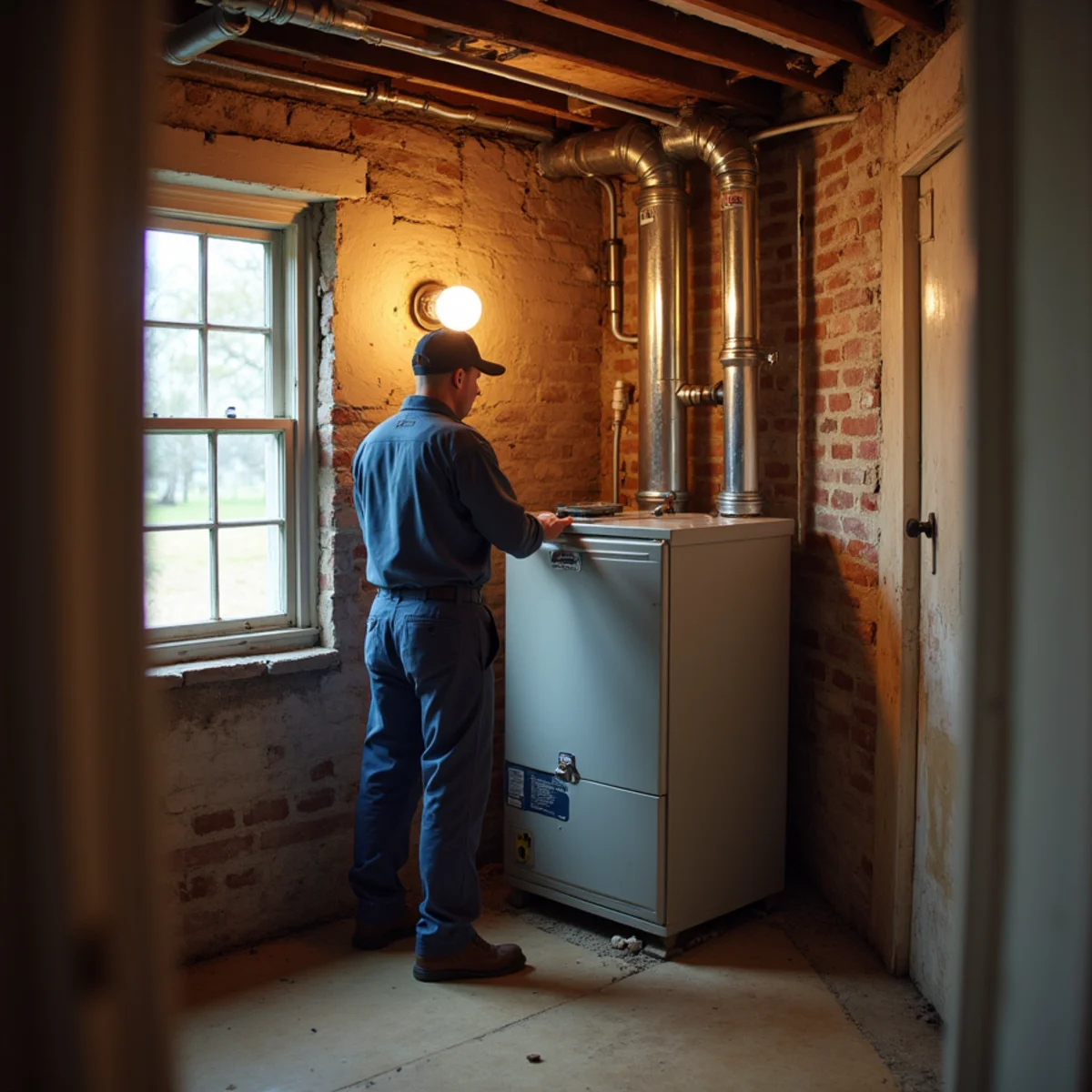
Walk the older streets of Pottstown and you see them everywhere: brick twin homes and rowhomes built between roughly 1850 and 1930, when the town's forges, foundries, and the Pottstown Iron Company drew thousands of workers to the Schuylkill valley. These houses were built to last, with thick masonry walls and, in most cases, radiator heat fed by a basement boiler.
Many of those boilers have been swapped out over the decades, but the piping and the cast-iron radiators often date back generations. Retrofitting one of these homes is not the same as putting a modern system in a 1990s colonial. It rewards patience, correct sizing, and respect for how the building was designed to hold and shed heat.
What the Iron-Town Housing Stock Has in Common
The twins and rows that went up during Pottstown's industrial peak share a building vocabulary. Solid brick exterior walls, plaster over lath inside, tall ceilings on the main floor, and a shared party wall between the two halves of a twin. Heat came from a coal boiler originally, later converted to oil or gas, pushing hot water or steam up to cast-iron radiators.
That construction has real thermal advantages. Masonry walls hold heat and moderate temperature swings. But these homes were also built before modern insulation, so heat escapes through single-pane windows, uninsulated rim joists, and the roofline unless those areas have been addressed.
Why You Cannot Just Drop In a Bigger Boiler
The instinct with an old, cold house is to install a larger boiler. That is usually the wrong move. An oversized boiler short-cycles, firing in bursts that waste fuel and wear the equipment while never running long enough to heat the home evenly.
The right approach starts with a heat-loss calculation for the actual building, not a rule of thumb. A proper Manual J load calculation looks at the wall construction, window count, air sealing, and the real square footage. In many retrofitted twins, the correct new boiler is smaller than the one it replaces, because past owners guessed high.
Working With Existing Radiators and Piping
One of the pleasures of these homes is that the old cast-iron radiators are often worth keeping. They are durable, they radiate a comfortable, even heat, and replacing them is expensive. A good retrofit keeps the radiators that work and pairs them with a modern, efficient boiler.
There are details that make or break the job:
- Checking whether the system is steam or hot water, since the two require very different boilers and controls.
- Inspecting the old piping for scale, leaks, and undersized runs that starve upstairs radiators.
- Adding modern controls and outdoor-reset so the boiler water temperature tracks the weather instead of running full-blast all winter.
- Balancing the system so the front bedroom is not freezing while the back parlor bakes.
- Verifying the chimney or venting suits the new appliance, which older masonry flues sometimes do not.
Steam versus hot water
Before anything is ordered, we confirm which system the house actually has. A one-pipe steam system with big cast-iron radiators and a sight glass on the old boiler is a completely different animal from a hot-water system with circulator pumps. Matching a new boiler to the wrong distribution type is the most expensive mistake in an old twin, and it is surprisingly easy to make from a photo alone.
Reading the old piping
The pipe running to the top-floor radiators tells a story. Decades of scale and sediment narrow the bore, which is often why an upstairs bedroom never quite warms. We flush the system and inspect the near-boiler piping, because a beautiful new boiler tied into clogged, undersized runs will disappoint on the first cold snap.
How a Retrofit Actually Goes on the Job
People picture a retrofit as swapping one box for another. On an iron-town twin it is closer to careful surgery on a system that has been running for a century. The old boiler comes out, but the real work is in what connects to it. Here is the order a clean retrofit follows:
Each step protects the ones after it, which is why skipping ahead to fire the new boiler is how call-backs happen.
- Step 1: Run a room-by-room heat-loss calculation and size the replacement to the real load, not the old nameplate.
- Step 2: Flush the existing radiators and piping to clear the scale and sludge that starve the far rooms.
- Step 3: Rebuild the near-boiler piping to the manufacturer's spec, including a primary loop and proper circulator placement on a hot-water system.
- Step 4: Fit modern controls with outdoor-reset so water temperature falls on milder days instead of running flat-out all winter.
- Step 5: Confirm the venting and the required spill and low-water safeties are correct for the new appliance and the existing flue.
- Step 6: Fire the system, bleed every radiator, and balance the loop so heat reaches the front bedroom and the back parlor evenly.
Fuel Choices in an Older Twin
Plenty of these homes still run on oil, especially where a gas line never reached the block. A retrofit is the natural moment to weigh options. A high-efficiency gas boiler, where a line is available, can meaningfully cut annual fuel costs, and an oil-to-gas conversion is a common project in the older districts.
For owners who want to keep radiators but move off fossil fuel, an air-to-water heat pump paired with the existing distribution is an emerging option, though it demands careful design in a leaky older home. The point is that the retrofit is a decision, not a like-for-like swap, and it deserves a real conversation about fuel, comfort, and budget.
Respecting the Building in a Historic District
Many of these twins sit within or near the High Street Historic District, where exterior changes can carry review requirements. Most boiler work is interior and does not trigger that, but venting changes, exterior condensers, or new flue terminations sometimes do. A contractor who works in Pottstown knows to check before cutting into a protected facade.
Beyond the rules, there is a craft argument for restraint. These houses have heated families through more than a century of Pennsylvania winters. A retrofit done with correct sizing, clean piping, and modern controls honors that history while dropping the fuel bill and steadying the comfort on the coldest January nights.
Frequently Asked Questions
Usually, yes. Cast-iron radiators are durable and comfortable, and replacing them is costly. A modern boiler with proper controls pairs well with existing radiators as long as the piping is sound and the system is balanced.
No. Oversized boilers short-cycle, waste fuel, and heat unevenly. The correct size comes from a heat-loss calculation for your specific home, and it is often smaller than the boiler being replaced.
Interior boiler replacement generally does not require historic review, but exterior venting or new flue terminations sometimes do. It is worth checking before any work that changes the appearance of the building.
A straightforward hot-water boiler swap is often a one- to two-day job, but repiping, flushing old radiators, or addressing venting can extend it. An on-site review of the piping and flue is the only way to give an honest timeline and a line-item quote.
Pottstown's iron-town twins were built for the long haul, and a thoughtful boiler retrofit keeps them comfortable for the next generation. If you own one of these historic homes and want the sizing done right the first time, HVAC Pottstown PA handles boiler retrofits with respect for older construction. Call +1 (327) 210-5999 for a line-item quote based on an on-site heat-loss review.
Need HVAC service in Pottstown today?
Call HVAC Pottstown PA for fast, honest HVAC service in Pottstown. We answer 24/7 and offer same-day service across Montgomery County.
Keep Reading

Tri-County Service: How Pottstown's Montco/Chester/Berks Line Shapes HVAC Response
Pottstown sits at the meeting point of three counties, and that location shapes how fast a technician can reach you. Here is how the tri-county geography works in practice.
Read more
Manatawny Creek Flood Zones: Protecting Outdoor Units in Pottstown's West End
Manatawny Creek gave the West End its name and its character, and it also floods. Here is how to protect an outdoor condenser or heat pump in the low ground near the water.
Read more