
What to Do When Your Furnace Quits on a Pottstown Winter Night
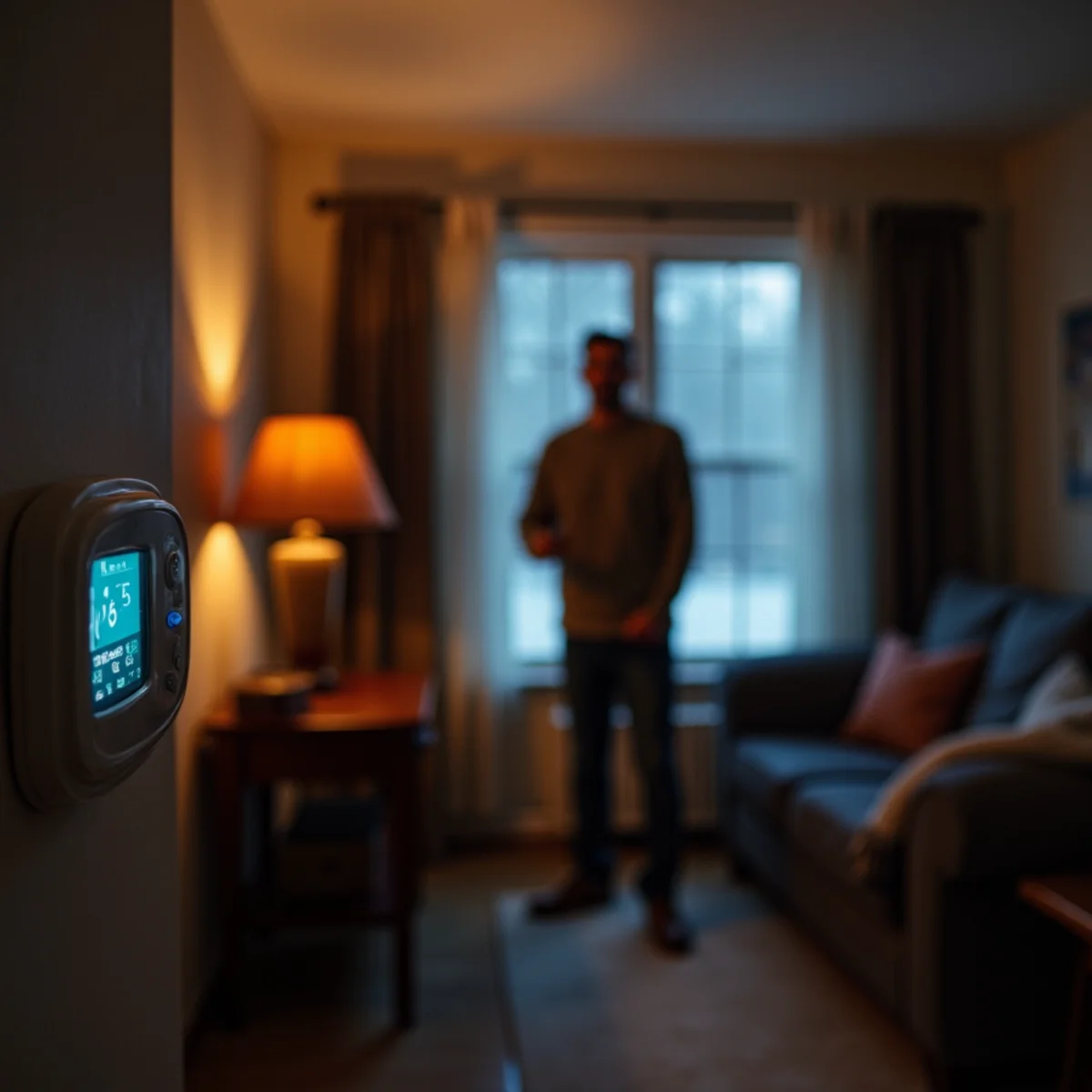
The furnace goes quiet, the house starts giving up its warmth, and the clock says it is far too late for this. In Pottstown a January overnight low near 22°F means an unheated brick twin or 1960s ranch can shed comfortable temperatures within a couple of hours. That is stressful, but it is also manageable if you slow down and work in order.
We have taken these calls for years, and the truth is that a large share of no-heat nights trace back to a handful of ordinary causes. Some you can safely sort out yourself in a few minutes. The rest need a technician, and knowing which is which keeps you from making a cold night worse.
Before Anything Else, Confirm It Is Safe
Troubleshooting always comes second to safety. If you smell rotten eggs or gas, hear a hissing near the furnace, see smoke, or feel the early signs of carbon monoxide exposure such as headache, nausea, or lightheadedness that eases when you step outside, stop. Get everyone out of the house, leave the door open behind you, and call for help from a safe distance.
If nothing about the situation feels unsafe, you can move on to the quick checks below. None of them ask you to open a sealed burner compartment, touch the gas valve, or relight anything.
The Five-Minute Check Anyone Can Do
Work through these in order. Each one rules out a common, harmless cause before you spend money on a diagnostic call:
- Thermostat: confirm it is set to Heat and the target is several degrees above the current room temperature. Swap the batteries even if the screen looks fine, since a weak battery can drop the call for heat.
- Power switch: the furnace has a service switch nearby that looks like a plain wall switch. A well-meaning family member can flip it off by mistake. Make sure it is on.
- Breaker: check the electrical panel for a tripped furnace breaker and reset it once. If it trips again immediately, leave it off and call.
- Air filter: a filter packed gray with dust can overheat the furnace and trip its safety limit. If you cannot see light through it, replace it.
- Front panel: the blower-door panel has a safety plunger behind it. If the panel is not seated fully, the furnace will not run at all.
High-Efficiency Furnaces Have One More Weak Point
If your furnace vents through white PVC pipe out a sidewall rather than up a metal chimney, it is a condensing, high-efficiency unit. These produce acidic condensate that drains through a small trap and tube. In a Pottstown cold snap that drain line can freeze, or the trap can clog, and the furnace will refuse to ignite to protect itself.
You can look for standing water near the base of the furnace or a drain line running to a floor drain. What you should not do is start disassembling traps at midnight. If a blocked condensate path is the culprit, note it for the technician and keep the rest of the checklist moving.
What to Leave Alone
A furnace that lights and then shuts off, over and over, is locking itself out on purpose. Do not keep resetting it past a try or two, because each cycle can stress the same failing part. Never relight a pilot, jump a safety switch, or run the kitchen oven with its door open for warmth. That last one is a real carbon monoxide hazard that sends people to the hospital every winter.
If you have a fireplace or a UL-listed space heater, those are fine as a stopgap while you wait. Keep space heaters on a clear hard surface, plugged straight into the wall, and never left running in an empty room or overnight.
What We Actually Test When We Arrive
When a technician gets to a no-heat call, the work is measurement, not swapping parts and hoping. On a modern gas furnace the sequence is quick: we watch one ignition cycle, then meter the components that stopped it. A hot-surface igniter that glows but never lights points one direction; one that reads as an open circuit on the meter points another. A flame sensor caked with oxide reports a failed flame even when the burner lights fine, so we clean and re-test it before condemning anything more expensive.
The parts that fail most on Pottstown furnaces are predictable. Igniters crack from thousands of on-off cycles, flame sensors foul over a season or two, pressure switches hang up when a condensate trap or intake screen clogs, and control boards give out after years of humidity and voltage swings. Because we carry those parts on the truck, the diagnosis and the repair are often the same visit. That is also why a second opinion matters on big-ticket calls: a cracked heat exchanger is a genuine replacement conversation, but a dirty sensor is a fifteen-minute fix, and the two should never be confused.
When It Is Time to Call
If the checklist did not bring the heat back, or the furnace short-cycles, blows only cool air, or flashes an error code on its little diagnostic light, the problem is inside the sealed system. A failed hot-surface igniter, a dirty flame sensor, a cracked heat exchanger, or a dead control board all need measured diagnosis and the right part, not guesswork.
A cracked heat exchanger in particular is both a no-heat problem and a carbon monoxide problem, which is one more reason not to sit on a furnace that keeps failing overnight. When you reach us, we can talk through what you are seeing over the phone and get a technician moving.
Frequently Asked Questions
It depends on insulation and outdoor temperature, but on a low-20s night many older Pottstown homes lose comfortable heat within two to four hours. Close off unused rooms and keep interior doors shut to slow the drop.
No. A furnace that repeatedly locks out is protecting you from a fault. Reset it once; if it fails again, leave it and call for a diagnosis rather than forcing more cycles.
If it is short-cycling or you smell anything unusual, yes, switch it off at the service switch and call. If it simply will not start and there is no odor, you can leave it set to Heat for the technician to observe.
In our experience the top offenders are a worn hot-surface igniter, a fouled flame sensor, a stuck pressure switch tied to a clogged condensate path, and an aging control board. We stock these on the truck so most no-heat calls are diagnosed and repaired in a single visit.
A dead furnace on a freezing night feels like an emergency because the house is genuinely on a clock. A calm, ordered checklist handles more of these calls than most people expect, and for everything past that, you are not on your own. HVAC Pottstown PA keeps a 24/7 line open all winter. If your heat is out and the checks came up empty, call +1 (327) 210-5999 and we will help you find the next safe move.
Need HVAC service in Pottstown today?
Call HVAC Pottstown PA for fast, honest HVAC service in Pottstown. We answer 24/7 and offer same-day service across Montgomery County.
Keep Reading
Ice Storms & Power Outages: Keeping Pottstown Homes Warm When the Grid Drops
A practical guide to riding out an ice-storm power outage in Pottstown: safe ways to stay warm, protect your plumbing, and restart your heating system.
Read more
AC Failure During a Montgomery County Heat Wave: Your First 5 Steps
When the AC dies during a Montgomery County heat wave, these five ordered steps keep your household safe and cool while you sort out the repair.
Read more